This dandelion jelly recipe sounds odd the first time you hear it. Jelly from weeds? Really? I get it.
I felt the same. But once you taste it, it clicks. Light. Floral. Almost honey-like.
This is one of those old-school recipes that feels magical but is actually very doable. You don’t need fancy tools.
You don’t need canning experience. You just need patience, clean flowers, and a little trust. And if you mess up one step, don’t worry, most of us do.
What Dandelion Jelly Tastes Like (Important Question)
No, it doesn’t taste green.
No, it doesn’t taste bitter.
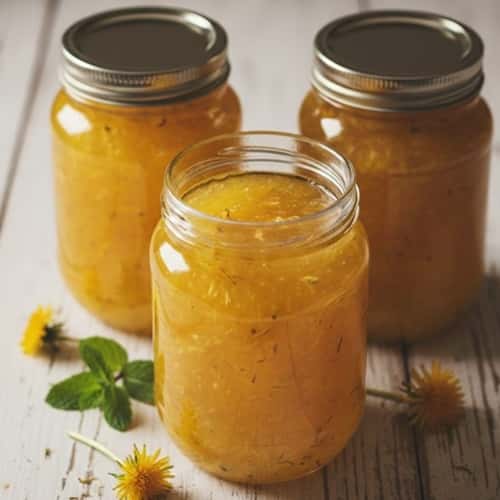
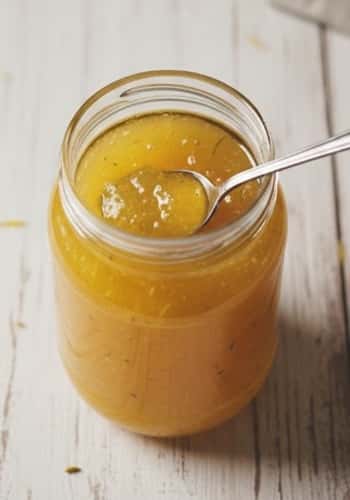
Yes, it tastes like sunshine in a jar.
People always ask, does it taste like honey? Kind of. But lighter. Softer. It’s floral without being perfumy.
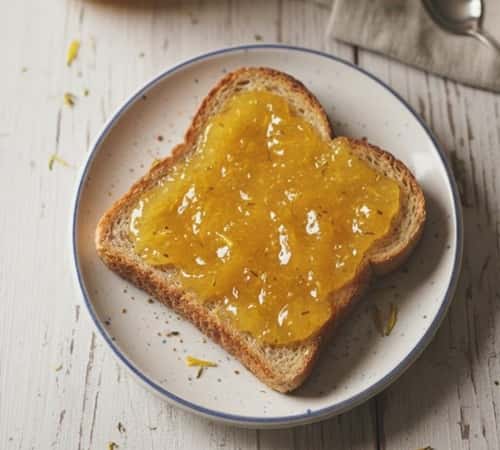
Spread it on toast, drizzle it on yogurt, or stir it into tea. I once ate it straight from the spoon and nobody judging me here.
Ingredients Needed To Make Dandelion Jelly
For about 4 half-pint jars:
- 4 cups dandelion petals (yellow parts only)
- 4 cups water
- 2 tablespoons lemon juice (fresh is better)
- 1 box powdered pectin (1.75 oz)
- 4 ½ cups granulated sugar
That’s it. Simple. No secret stuff.
Instructions To Make Dandelion Jelly
Step 1: Prep the Dandelion Petals
This is the longest step. Don’t rush it.
Pull the yellow petals away from the green base. The green parts are bitter. A little green won’t kill it, but a lot will ruin flavor. I learned that the hard way and it was not great.
You don’t need perfection. Just mostly yellow. Your fingers will turn yellow. That’s normal.
Rinse petals gently in cold water to remove bugs or dirt. Drain well.
Step 2: Make the Dandelion Tea
Place petals and water in a saucepan. Bring to a gentle boil.
Lower heat and simmer for 15 minutes. The liquid will turn golden yellow. Smells faintly floral. Not strong.
Remove from heat. Cover. Let it steep for at least 6 hours or overnight. Longer steeping equals deeper flavor. I usually leave it overnight (honestly you should too) because I forget about it.
Strain through cheesecloth or a fine strainer. Press gently. You should end up with about 3 cups of liquid. If you have slightly more or less, it’s okay. Jelly forgiving sometimes.
Step 3: Prepare for Jelly Making
Now things move fast. Read this whole step before starting.
Pour the strained dandelion tea into a large pot. Add lemon juice. Lemon juice isn’t optional. It helps flavor and it helps the jelly set.
Stir in the powdered pectin. Whisk well. No lumps. Lumps are bad.
Bring mixture to a rolling boil. A real boil. One that doesn’t stop when you stir. This part matters more than you think.
Step 4: Add Sugar and Boil
Once boiling hard, add all the sugar at once. Stir fast.
Bring it back to a rolling boil. Boil exactly 1 to 2 minutes. Stir constantly. Don’t walk away. I walked away once and had sticky regret all over my stove.
Remove from heat. Skim off foam if there’s any. Foam isn’t harmful, it just looks messy.
The jelly will look thin. That’s normal. It thickens as it cools. If it looks watery now, don’t panic, trust the process.
Step 5: Jar and Cool
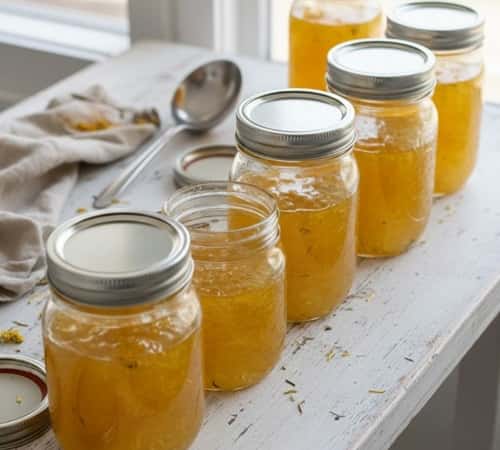
Pour hot jelly into clean jars, leaving about ¼ inch headspace.
Wipe rims. Add lids. Tighten finger-tight.
You can water-bath can for 10 minutes if you want shelf stability. Or just let jars cool and store in the fridge. I usually refrigerate because we eat it fast.
Let jars cool completely. You’ll hear pops. That sound is happiness.
Troubleshooting (Because Things Happen)
Jelly didn’t set?
Chill it overnight. Still runny? Use it as syrup. It’s amazing on pancakes.
Too bitter?
Too much green base. Next time, be pickier.
Too sweet?
Serve with salty foods like buttered toast or cheese. Balance saves it.
Not every batch is perfect. Mine wasn’t perfect either and still got eaten.
Ways I Actually Use Dandelion Jelly
On toast with butter. Classic.
Swirled into plain yogurt. So good.
Mixed into hot tea instead of honey. This surprised me.
Glazed over warm biscuits. Dangerous.
I even used it in salad dressing once. It worked. I didnt expect that honestly.
Storage Tips
Refrigerated jars last about 3 to 4 weeks.
Water-bath canned jars last up to a year in a cool, dark place.
Always check for mold or off smells. Jelly should smell fresh and floral. If it smells weird, toss it. Food safety over feelings.
Final Thoughts
Making dandelion jelly isn’t just about the recipe.
It teaches you to slow down, notice what grows around you, and respect old food knowledge we’re losing fast.
Most people mow these flowers without a second thought. Turning them into jelly changes how you see your yard.
You start noticing seasons more. You waste less. You appreciate simple sweetness. And honestly, that’s valuable.
Not every recipe feeds just your stomach. Some feed your perspective too.