Pinterest is not just a social platform.
It is a visual search engine.
And just like Google, Pinterest rewards creators who focus on clear topics and structured content.
Yet most bloggers make a huge mistake when trying to grow traffic from Pinterest.
They try to cover everything.
Breakfast recipes.
Dinner recipes.
Snacks.
Smoothies.
Desserts.
Basically… an entire cookbook.
At first this seems logical.
But in reality, it confuses the Pinterest algorithm.
Pinterest works best when it can clearly understand what your content is about.
And that’s why some creators grow extremely fast while others struggle for years.
The difference is focus.
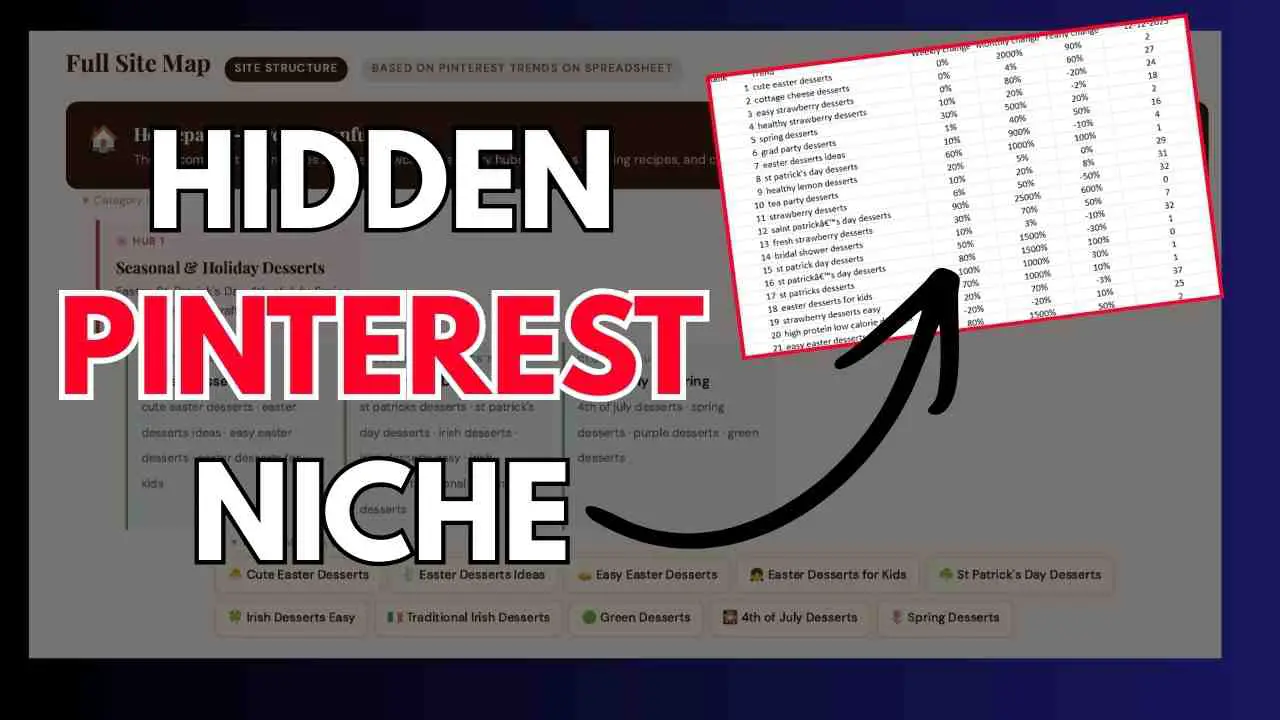
Recently I analyzed Pinterest trend data using Pintrendo and discovered something interesting.
There is one niche that consistently performs extremely well on Pinterest.
A niche that combines:
• strong visual appeal
• seasonal search spikes
• evergreen demand
That niche is desserts.
But not the way most people approach it.
Let me explain.
Why Desserts Perform So Well on Pinterest
Pinterest users come to the platform looking for ideas and inspiration.
They are planning events, holidays, parties, and family gatherings.
And desserts naturally fit into these moments.
Unlike many other food categories, desserts are extremely visual.
Bright colors.
Beautiful presentation.
Creative decorations.
All of these elements make desserts highly saveable content.
When people see a beautiful dessert idea, they often save it to their Pinterest boards for later.
And saves are one of the strongest engagement signals on Pinterest.
More saves usually means more distribution.
But there’s another reason desserts work so well.
They fit perfectly into Pinterest’s seasonal discovery cycle.
Pinterest Loves Seasonal Content
Pinterest users plan ahead.
They search for ideas weeks or even months before events happen.
For example:
Easter desserts
Christmas cookies
Graduation party desserts
Baby shower desserts
These searches spike every year.
Which means a single piece of content can bring traffic year after year.
When I analyzed Pinterest trend data, many of the top searches were seasonal dessert ideas like:
- Cute Easter desserts
- St Patrick’s Day desserts
- Spring desserts
- 4th of July desserts
- Graduation desserts
This kind of content creates recurring traffic.
Publish once.
Benefit for years.
But seasonal desserts are only one part of the opportunity.
There are several other powerful sub-categories inside the dessert niche.
How This Pinterest Data Was Collected
Before building the strategy in this article, I wanted to make sure the opportunity was backed by real data – not guesses.
So I pulled a full dataset directly from Pinterest search trends and then analyzed every query using Pintrendo.
This allowed me to see exactly what people are actively searching for on Pinterest right now.
Instead of randomly choosing dessert topics, I reviewed dozens of real search queries and filtered them down to the most promising opportunities based on:
- trend growth
- seasonal spikes
- evergreen demand
- visual appeal on Pinterest
In total, the dataset revealed 50 dessert-related searches that show strong Pinterest activity.
Analyzing these queries inside Pintrendo made it possible to spot clear patterns in the niche – things like seasonal desserts, ingredient-based desserts, and health-focused desserts.
The biggest advantage of this approach is that it dramatically reduces research time.
Instead of spending weeks trying to figure out what to publish, you can start with a data-backed list of topics that people are already searching for on Pinterest.
In fact, the blueprint available later in this article includes the full keyword map built from that dataset so you can skip the research phase entirely.
Ingredient-Focused Desserts
Another major trend on Pinterest is ingredient-based searches.
People often search for dessert ideas based on what they already have in their kitchen.
For example:
Strawberry desserts
Lemon desserts
Date desserts
Almond flour desserts
These searches are common because they solve a real problem.
Someone might think:
“I bought strawberries. What dessert can I make with them?”
Pinterest becomes their inspiration engine.
Content built around these ingredients can attract consistent traffic because the intent is very clear.
The Growing Demand for Healthy Desserts
Another interesting trend is the rise of health-focused desserts.
Many Pinterest users want treats that feel indulgent but still align with their lifestyle goals.
Examples include searches like:
- High protein desserts
- Low calorie desserts
- Sugar free desserts
- Healthy chocolate desserts
This creates a perfect opportunity for bloggers to combine nutrition trends with dessert creativity.
Healthy desserts are especially powerful because they attract two audiences at once:
People who love sweets.
And people who want healthier options.
The Biggest Mistake Bloggers Make
Now here is where many bloggers go wrong.
They discover the dessert opportunity…
But instead of building a focused site, they create a general food blog.
They publish:
- Dinner recipes
- Lunch recipes
- Smoothies
- Healthy bowls
- Desserts
Everything.
At first this seems like a good strategy.
But it actually dilutes your authority.
Pinterest prefers accounts that clearly represent a specific niche.
When your content is scattered across many unrelated topics, it becomes harder for the algorithm to categorize your pins.
And when Pinterest is unsure about your content…
Distribution slows down.
That’s why a focused niche strategy works much better.
The Smart Strategy: Build a Dessert-Focused Content System
Instead of creating random posts, successful sites follow a structured content framework.
Think of your website like a tree.
The trunk represents your core topic.
The branches represent major categories.
The leaves represent individual content pieces.
When everything connects logically, both users and search engines understand your site better.
After analyzing the Pinterest data, I created a blueprint for structuring a dessert website around six main content hubs.
These hubs organize your content while keeping the site focused on one niche.
The hubs include topics such as:
• seasonal desserts
• healthy desserts
• fruit-based desserts
• occasion desserts
• desserts people can sell from home
• visually themed desserts
Each hub then expands into dozens of specific content pages based on Pinterest search trends.
This creates a scalable system where every new post strengthens the overall authority of the site.
How Pinterest Traffic Compounds Over Time
One of the most exciting things about Pinterest is that traffic can compound.
Unlike social platforms where posts disappear quickly, Pinterest content often circulates for months or years.
For example:
An Easter dessert post published this year can gain traction again next Easter.
A strawberry dessert recipe may trend every spring.
A baby shower dessert idea may get saved thousands of times by people planning events.
Over time, these posts create a growing library of evergreen content.
And each piece adds another entry point for Pinterest users to discover your site.
Monetization Opportunities in the Dessert Niche
Traffic alone is valuable, but the dessert niche also offers multiple ways to monetize.
Display ads are one of the most common options.
Food blogs often earn strong advertising revenue because recipe pages generate long user sessions.
Affiliate marketing is another opportunity.
You can recommend baking tools, mixers, pans, ingredients, and kitchen accessories.
There is also potential for digital products.
Examples include:
Printable dessert recipe collections
Seasonal dessert guides
Party dessert planning checklists
Some creators even expand into teaching others how to start small baking businesses from home.
This makes the niche attractive not only for traffic but also for long-term business growth.
The Blueprint That Ties Everything Together
After analyzing Pinterest trends and successful site structures, I created a complete dessert site blueprint.
The blueprint includes:
- a full Pinterest keyword map
- a 3-tier site structure
- category hubs designed for topical authority
- over 50 individual content ideas based on real Pinterest trends
- a homepage layout that guides visitors into the right categories
- monetization strategies for scaling the site
This blueprint essentially acts as a roadmap for building a Pinterest-friendly dessert website.
Instead of guessing what to publish next, you follow a structured plan built from real search data.
Download the Dessert Site Blueprint
If you want to see exactly how this structure works, I’ve made the full blueprint available as a free download.
Inside the blueprint you’ll find:
- the full site structure
- 50 Pinterest trend keywords mapped to content pages
- category hubs designed for maximum authority
- a homepage layout strategy
- monetization paths for turning traffic into income
You can download it here:
[Download the Dessert Site Blueprint]
This blueprint will show you exactly how to turn Pinterest trends into a structured content site.
If you’re serious about growing traffic from Pinterest, this framework can save you months of trial and error.
Final Thoughts
Pinterest success rarely comes from random posting.
It comes from clarity, structure, and consistency.
When your content clearly represents a single niche, the algorithm understands who to show your pins to.
Desserts happen to be one of the most visually engaging and evergreen niches on the platform.
Combined with a strong site structure, they can become a powerful traffic engine.
If you want to explore this opportunity further, download the blueprint and study the framework.
It will give you a clear picture of how a Pinterest-focused dessert site can be built step by step.