There’s something weirdly comforting about pulling a tray of deeply caramelized veggies out of the oven when the kitchen smells smoky, sweet, and slightly buttery.
This roasted vegetable recipe started as one of those “use whatever is left in the fridge” dinners, but now I make it on purpose because the glaze turns ordinary vegetables into something almost candy-like around the edges. Not kidding.
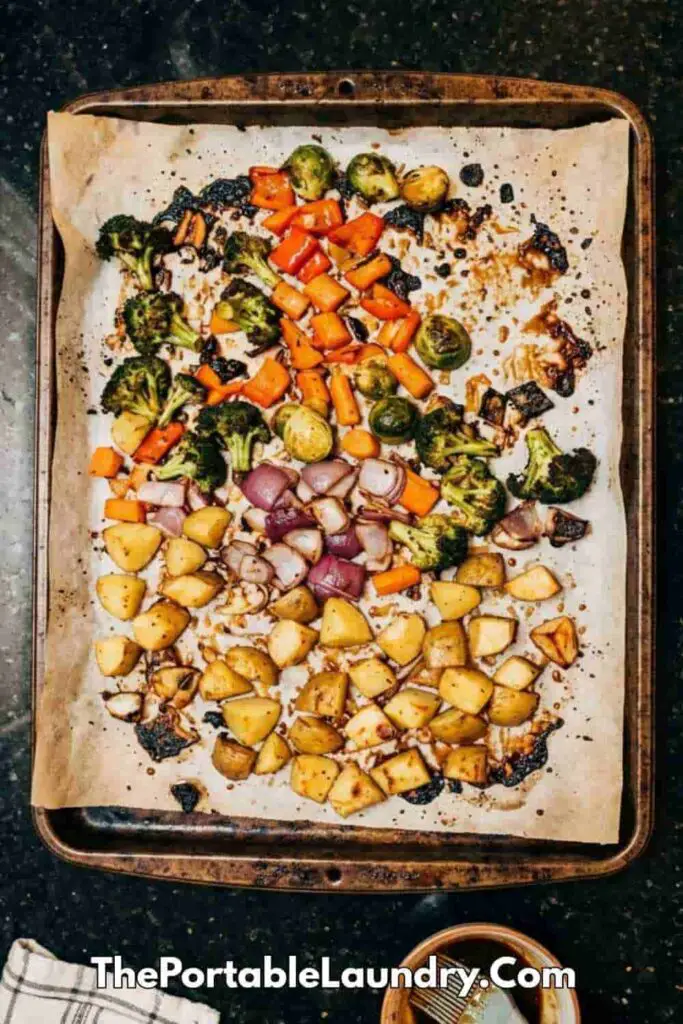
The trick is layering flavors instead of tossing everything together at once.
If you’ve ever searched for how to make roasted veggies that actually taste exciting and not bland cafeteria vegetables, this one fixes that problem fast.
It’s cozy, messy, colorful, and honestly makes a ridiculously good dinner recipe on busy nights.
Why This Roasted Vegetable Recipe Tastes Different
Most roasted vegetables in the oven recipe versions stop at olive oil, salt, and pepper.
That’s fine… but this one gets a sticky maple-chili glaze brushed on halfway through roasting, so the vegetables blister instead of steaming. Tiny detail. Huge difference.
I also roast the vegetables in stages because potatoes and carrots take longer than zucchini or onions. Sounds fussy, but it really ain’t difficult once you do it once.
You’ll get:
- crispy browned edges
- soft buttery centers
- sweet heat from maple and chili flakes
- smoky garlic flavor
- restaurant-style texture with homemade personality
And yes, your kitchen gonna smell incredible.
Ingredients Needed To Make Roasted Vegetable Recipe
Vegetables
- 2 cups baby potatoes, halved
- 2 carrots, sliced thick
- 1 zucchini, chopped chunky
- 1 red bell pepper
- 1 yellow bell pepper
- 1 red onion, cut into wedges
- 1 cup broccoli florets
- 1 cup cauliflower florets
For the Maple-Chili Glaze
- 3 tablespoons olive oil
- 1 tablespoon melted butter
- 1 tablespoon maple syrup
- 1 teaspoon honey
- 3 garlic cloves, grated
- 1 teaspoon smoked paprika
- ½ teaspoon chili flakes
- ½ teaspoon black pepper
- 1 teaspoon sea salt
- squeeze of fresh lemon
Optional Finishers
- crumbled feta
- toasted pumpkin seeds
- chopped parsley
- tiny drizzle of hot honey
Step 1: Prep The Vegetable Oven Setup Properly
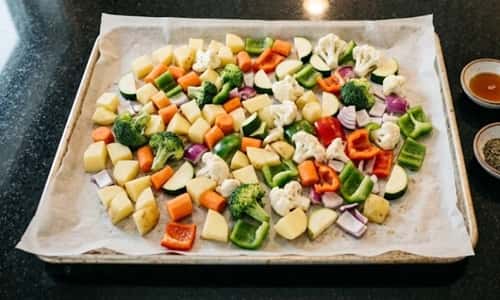
First things first, preheat your vegetable oven to 425°F. High heat matters because it gives you those browned crispy bits instead of soggy vegetables.
Line a large baking tray with parchment paper. Don’t skip it unless you enjoy scrubbing burnt glaze later. I learned that the hard way honestly.
Now chop everything into pieces that are kinda similar in size. Not perfect-perfect. Homemade food should look homemade.
The potatoes need to be halved small enough so they roast fully before the softer vegetables collapse into mush.
Keep broccoli and zucchini slightly bigger because they cook quicker than carrots.
If your vegetables are wet after washing, dry them really well using a kitchen towel. Water creates steam. Steam ruins roasting.
Step 2: Start Roasting The Hard Vegetables First
Add potatoes and carrots to the tray first because they’re stubborn little things and take longer.
Drizzle with half the olive oil mixture. Toss with your hands. Yep, hands work better than spoons sometimes. Spread them out well. Crowding the tray is the number one reason roasted vegetable meals turn watery.
Slide the tray into the oven for 15 minutes.
During this time, don’t walk too far away because the smell sneaks up on you fast. Mine always starts smelling buttery around minute twelve-ish.
After 15 minutes, flip the potatoes carefully using a spatula. Some edges should already look golden and slightly wrinkled.
That’s exactly what you want.
Step 3: Make The Sticky Maple-Chili Glaze
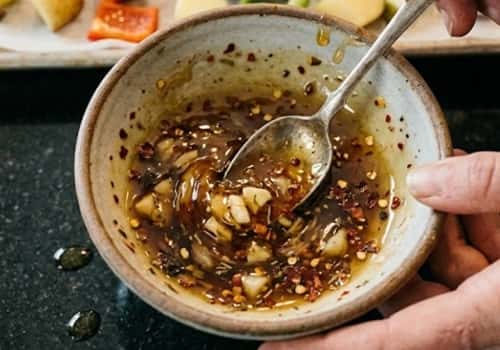
While the vegetables roast, mix together:
- melted butter
- maple syrup
- honey
- garlic
- smoked paprika
- chili flakes
- salt
- pepper
- remaining olive oil
The glaze should look shiny and slightly thick. If it smells too sweet, don’t panic. Once roasted, the garlic and paprika balance everything out beautifully.
I sometimes sneak in one tiny splash of soy sauce too. Not traditional maybe, but wow it works.
Taste the glaze carefully. It should feel sweet first, smoky second, spicy at the end.
Step 4: Add The Softer Vegetables
Now pull the tray out carefully. The potatoes should look lightly crisped already.
Add zucchini, peppers, onion, broccoli, and cauliflower onto the tray. Don’t dump everything in the center like I did the first time because vegetables need breathing room to roast properly.
Brush or drizzle the maple-chili glaze all over everything. Toss lightly.
Some glaze pooling underneath is okay. Actually it creates little sticky caramelized spots later that taste insanely good.
Return the tray to the oven for another 20 minutes.
Halfway through, rotate the tray because home ovens heat unevenly and some corners roast quicker than others. Mine definitely does.
Step 5: Roast Until The Edges Look Slightly Burnt
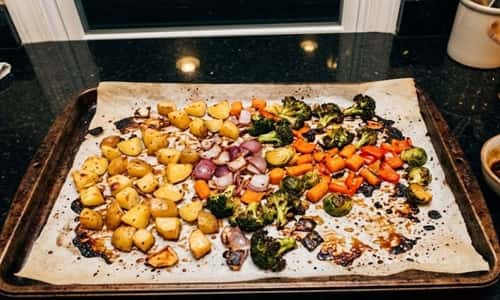
This part matters more than timing honestly.
You’re not looking for “cooked.” You’re looking for deeply roasted edges with tiny dark spots. That’s where flavor hides.
The broccoli tips should crisp up a little. Peppers soften. Onion edges become sweet and jammy almost.
If things still look pale after 20 minutes, roast another 5–8 minutes.
Trust your eyes more than the clock.
And don’t stir too much near the end. Leaving the vegetables untouched helps caramelization happen better.
Your kitchen probably smells outrageous right now.
Step 6: Finish With Texture And Brightness
Once roasted, immediately squeeze fresh lemon over everything while hot. That little acidity wakes up the whole tray.
Scatter parsley on top. Add feta if you like creamy salty contrast. Pumpkin seeds add crunch too.
Sometimes I drizzle extra hot honey over the potatoes and honestly nobody complains about it.
Serve directly from the tray or pile everything onto a large warm plate.
The vegetables should look glossy, colorful, slightly messy, and beautifully uneven. Not stiff and perfect.
That’s the charm.
How To Cook Vegetables In The Oven Without Making Them Mushy
A few little tricks change everything:
1. Dry vegetables properly – Moisture is the enemy of roasting.
2. Use high heat – 425°F creates browning fast.
3. Don’t overcrowd the tray – Vegetables need airflow.
4. Roast in stages – Hard vegetables first. Soft vegetables later.
5. Finish with acid – Lemon brightens roasted flavors instantly.
Simple stuff, but people skip these steps all the time.
Best Ways To Serve This Dinner Recipe
- over garlic yogurt sauce
- inside grain bowls
- beside grilled meats
- tossed with pasta
- topped on sourdough toast
- mixed into quinoa salad
Cold leftovers straight from the fridge? Weirdly good too.
Final Thoughts
Roasting vegetables properly is less about the recipe itself and more about understanding heat, moisture, and timing together.
Once you figure that out, almost any vegetable oven combination starts tasting richer and naturally sweeter without needing heavy sauces.
That’s why roasted vegetables in the oven recipe ideas work so well for busy families, especially when produce is starting to look tired in the fridge.
The caramelization completely changes the flavor chemistry of the vegetables.
Tiny burnt edges actually create deeper sweetness naturally. It’s kitchen science doing its thing. And honestly, once you master how to make roasted veggies this way, plain steamed vegetables start feeling very boring real quick.