If you’ve ever wanted to teach your kids about giving back without the boring lectures, DIY Donation Box Crafts for kids are pure gold.
They mix creativity, color, and compassion in one hands-on project.
I’ve watched my son pour his heart into decorating boxes that actually mean something – not just for art’s sake, but for purpose.
These little projects don’t just collect coins; they spark conversations about gratitude, kindness, and community.
Whether your child loves painting, crafting, or just competing to see who donates more, these donation box ideas turn “giving” into a fun family tradition that lasts way beyond the holidays.
1. The Gratitude Window Box
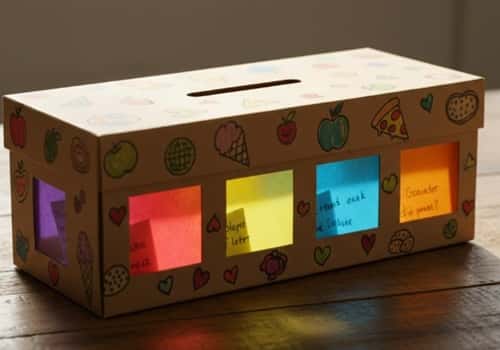
Here’s what worked for us last year. Take a standard shoebox and cut rectangular “windows” on all four sides – about 2×3 inches each.
Your kids can cover these openings with colored tissue paper from the inside, creating a stained glass effect when you hold it up to light.
But here’s the twist that makes this kids craft special: before sealing those windows, have them write what they’re grateful for on small paper strips and tape them inside so they’re visible through the colored panels.
Why does this matter? Because teaching gratitude and giving go hand-in-hand, and this donation collection container becomes a conversation starter.
The top needs a coin slot (obviously), but decorating the outside with paint markers lets kids personalize their charity box with drawings of what the donations will support – food banks, animal shelters, you name it.
We filled ours with loose change for three weeks, and my seven-year-old actually started asking to donate his birthday money. The hands-on learning here is real, not forced.
2. The Chain Reaction Challenge Box
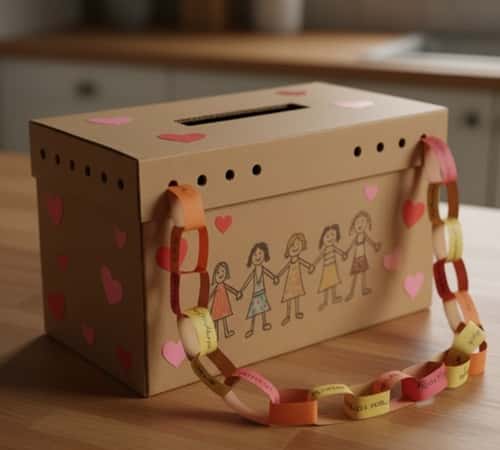
Most donation boxes just sit there. Boring. This one literally grows as your family giving increases. Start with a small cardboard box – think Amazon delivery size.
Punch holes on opposite sides near the top edge and thread a long paper chain through them that drapes down both sides.
Every time someone drops money in, they add one link to the chain.
My kids turned this into a competition real quick. The chain started at maybe five links, and within two weeks, it was snaking across our kitchen counter like some kind of charitable anaconda.
What I love about this community service project is the visual progress – your kids see their generosity literally expanding.
Decorate the box itself with Giving Tuesday themed cutouts (hands holding hearts, people helping people), and use construction paper in fall colors since we’re in that season. Orange, burgundy, deep yellow – it feels right for late November.
The competitive element sneaks in positive reinforcement without you having to nag.
Kids naturally want to make that chain longer, which means they’re thinking about donations daily.
We even wrote acts of kindness we performed on some links – because giving back isn’t always about money, right? This children’s activity teaches them that every small contribution builds something bigger.
Plus, breaking down that chain to count up on donation day? Pure satisfaction.
3. The Rainbow Layer Box
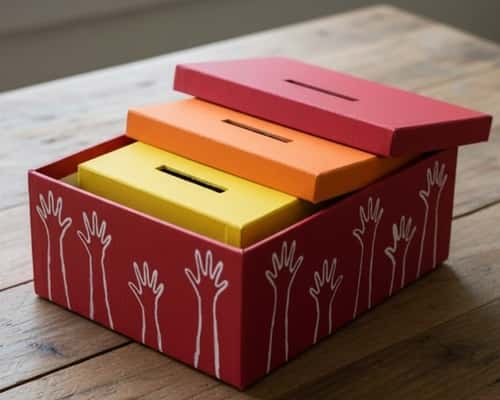
Want to blow your kids’ minds with something simple? Stack three different colored shoeboxes inside each other – small, medium, large – like those Russian nesting dolls but way easier.
Paint or cover each box in a different bright color: the smallest in yellow, medium in orange, largest in red. Each color represents a different donation goal or giving level.
Here’s how we ran it: the yellow box was for pocket change, the orange for dollar bills, and the red outer box collected both plus pledges for volunteer hours or acts of service.
My kids loved sorting their contributions by “level,” and it taught them that charitable giving isn’t one-size-fits-all. Sometimes you’ve got quarters.
Sometimes you’ve got more. Both matter. The visual layering makes it clear that giving builds on itself – small contributions add up to something bigger when combined.
Cut a coin slot in each box top so they nest properly while still functioning.
Decorate the outside of the largest box with drawn or painted images of hands reaching upward, which ties into the whole “lifting others up” concept without being too on-the-nose about it.
This hands-on activity naturally sparked conversations in our house about different ways to help our community.
Plus, watching them carefully place each nested box was like a puzzle – they were learning spatial reasoning while building their donation station. Win-win.
4. The Handprint Heart Box
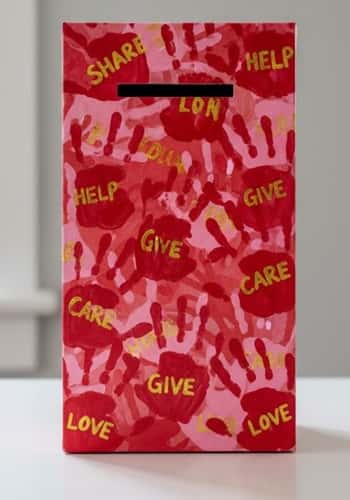
This one hits different because your kids literally leave their mark on it.
Start with a rectangular tissue box (the tall kind works best) and have your kids dip their hands in washable paint – red, pink, or whatever Giving Tuesday colors speak to them.
Press those painted handprints all over the box in a random pattern, overlapping them to create texture and depth.
Here’s where it gets good: once the handprints dry, use a silver or gold paint marker to write one word inside each print.
Things like “share,” “help,” “care,” “give,” “love,” “hope.”
My daughter went rogue and added “cookies” to one, which honestly made me laugh, but hey, feeding people matters too, right? The symbolism is pretty obvious – every hand can help, every person makes a difference – but it doesn’t feel preachy when it’s coming from their actual handprints.
The tactile experience of this craft project makes it memorable.
They’re not just decorating some random box; they’re contributing something personal to the charitable cause.
We kept this box on our kitchen counter, and guests would always comment on it, asking about the handprints.
That gave my kids natural opportunities to explain what Giving Tuesday meant and why they made it.
The pride in their voices when describing their creation? That’s the kind of positive reinforcement that builds lifelong generous habits.
Plus, cleanup is easier than glitter – trust me on this one.
5. The Spinning Wheel Fortune Box
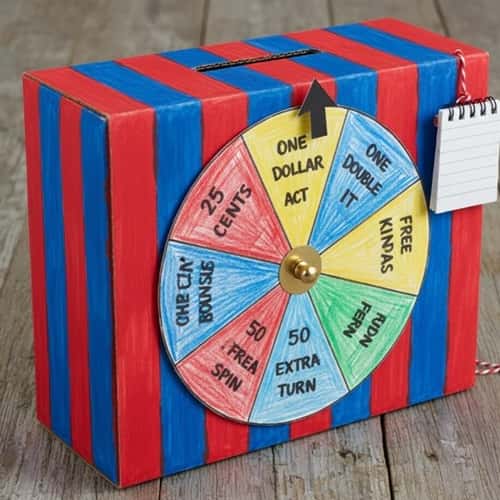
Okay, this takes slightly more effort, but it’s worth it when you see your kids’ faces light up.
Mount a small cardboard spinner (make it from cardboard and a brad fastener) on the front of your donation box.
Divide the wheel into sections with different donation amounts or giving challenges: “Add 25 cents,” “Donate a Dollar,” “Do an act of kindness,” “Double your last donation.”
Every time someone approaches the box, they spin first, then follow through. My kids started saving their allowance just so they could spin multiple times.
We decorated the wheel with Giving Tuesday colors (blue and red are the official ones, apparently – who knew?) and made the box itself look like a mini carnival game.
That element of chance transforms this from a boring receptacle into something they actively want to engage with.
The genius here is unpredictability. Some spins cost nothing but a kind action. Others require actual money.
But it averages out, and meanwhile, your kids are learning that giving comes in different forms.
We kept a small notepad attached to the box where they could write down the kind acts they performed when the wheel landed on that section.
Reading through those notes later – helping their sister clean up, sharing snacks, calling grandma – that’s the stuff that actually matters.
This interactive craft turned philanthropy education into something resembling fun, which honestly feels like a parenting win.
Final Thoughts
Here’s what nobody tells you about these donation box projects – they stick around way longer than Giving Tuesday.
We kept ours going through December and into January, and honestly, the habit formation that came out of it surprised me.
Your kids start noticing needs around them more. They ask questions about why some people have less.
These boxes aren’t just containers for coins; they’re conversation starters that naturally lead to bigger discussions about privilege, community, and responsibility.
And yeah, your house will be covered in cardboard scraps for a weekend, but watching your kid explain their creation to visiting relatives – describing why they chose certain decorations or why the giving matters to them – that makes the mess worth it.