There’s something wildly comforting about a bubbling skillet of curry sitting in the middle of the table while everyone quietly grabs another spoonful.
This thai curry chicken recipe became my accidental weeknight obsession after I burnt shallots one evening and tossed them into the sauce anyway. Weirdly? It made the curry taste deeper, smokier, and honestly better than most restaurant versions I’ve tried.
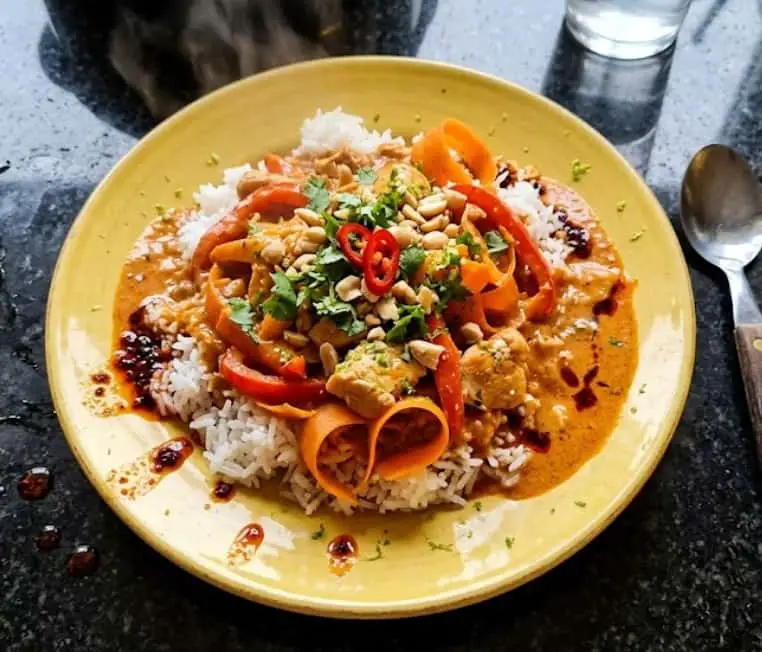
The creamy coconut broth hugs the chicken in the most cozy way possible, while fresh lime keeps everything awake and bright.
If you love bold flavor but hate complicated cooking, this one fits right into the world of quick and easy thai recipes without tasting rushed.
Why This Thai Curry Chicken Recipe Feels Different
Most versions lean heavily sweet or overly creamy. Mine goes slightly smoky, slightly spicy, with caramelized edges that make the curry taste slow-cooked even though it really isn’t.
The trick is blistering the shallots and letting the curry paste fry properly before adding liquids. Tiny step. Massive difference.
And no, you do not need fancy chef skills for this.
This is the kind of dinner recipe that tastes even better while standing in the kitchen eating directly from the pan. I did that yesterday actually.
Ingredients Needed To Make Thai Curry Chicken
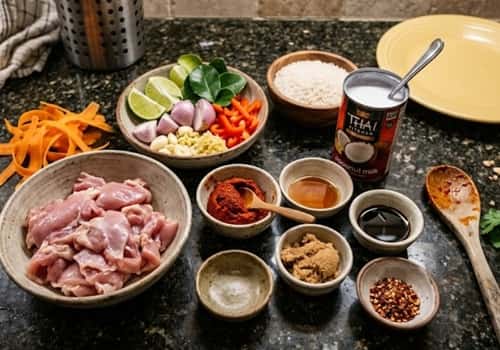
For the Curry
- 600g boneless chicken thighs or chicken breast, sliced thin
- 2 tablespoons red curry paste
- 1 tablespoon tomato paste
- 1 tablespoon fish sauce
- 1 teaspoon soy sauce
- 1 tablespoon brown sugar
- 1 can full-fat coconut milk
- 1 cup chicken stock
- 3 medium shallots, halved
- 4 garlic cloves, smashed
- 1 thumb-sized ginger piece, grated
- 1 red bell pepper, sliced
- 1 small carrot, shaved into ribbons
- 1 teaspoon chili flakes
- 2 kaffir lime leaves (optional but worth it)
- Juice of 1 lime
- 2 tablespoons oil
For Serving
- Steamed jasmine rice
- Thai basil or cilantro
- Lime wedges
- Crushed peanuts
- Crispy chili oil drizzle
Step 1: Char The Shallots First
Heat a large deep skillet over medium-high heat. Add a little oil, then place the shallots cut-side down. Don’t move them too quickly. Seriously, leave them alone for 3–4 minutes so they get dark golden edges with tiny burnt spots.
That smoky sweetness changes everything later.
Add the garlic beside the shallots during the last minute so it softens without turning bitter. Your kitchen gonna smell unreal at this point.
Once charred, remove and roughly chop the shallots.
Step 2: Brown The Chicken Properly
In the same skillet, add another drizzle of oil. Lay the sliced chicken pieces in one layer. Don’t overcrowd the pan or it’ll steam instead of brown. Let one side cook untouched for 2 minutes before flipping.
You want little golden bits stuck to the pan. That’s flavor. Don’t panic about it.
Sprinkle in a tiny pinch of salt even though the sauce later has seasoning too. Layers matter more than people think honestly.
Cook until the chicken is about 80% done, then transfer to a plate.
Step 3: Fry The Curry Paste Like You Mean It
Lower the heat slightly. Add the curry paste and tomato paste directly into the pan with another small spoon of oil. Stir constantly for about 2 minutes.
This part matters a LOT.
Raw curry paste tastes flat and sharp. Fried curry paste becomes rich, almost jammy. The oil should turn orange-red and glossy. Add the ginger and chopped charred shallots now.
If the pan looks dry, splash a tiny bit coconut milk in there.
Then stir in brown sugar, fish sauce, and soy sauce. Smells crazy good already right?
Step 4: Build The Sauce Slowly
Pour in the coconut milk gradually while stirring. Don’t dump it all at once. Add the chicken stock after that and toss in kaffir lime leaves if using.
Now the sauce starts looking like actual red curry sauce recipe magic.
Let everything simmer gently for 5 minutes. Tiny bubbles only. Aggressive boiling can split coconut milk and the texture gets weird. It still tastes good tho, but not silky.
Add chili flakes depending on your spice tolerance. I go heavy because I like sweating during supper. My family absolutely dont.
Step 5: Add Vegetables And Chicken Back In
Return the chicken to the skillet along with bell peppers and carrot ribbons. Stir gently so the vegetables stay vibrant and don’t turn mushy.
Cook another 6 to 8 minutes until the chicken is fully tender and coated in sauce. The carrots soften quickly, especially thin ones.
Squeeze fresh lime juice right at the end. This wakes the whole dish up in a sneaky way. Without acid, curry can taste heavy.
Taste it now.
Need more salt? Add fish sauce. More heat? Chili oil. Too spicy? Tiny splash coconut milk fixes it.
Step 6: Plate It Like A Real Home Cook
Scoop jasmine rice onto a slightly messy yellow plate or shallow bowl. Ladle the curry over the rice while letting extra sauce spill naturally around the edges.
Do not over-style it.
Scatter cilantro, crushed peanuts, and a light drizzle of crispy chili oil on top. Add lime wedges off to the side. Some sauce drips and uneven rice placement actually makes it look more believable and cozy.
This chicken thai curry recipe photographs best with steam still visible. Move quick.
What To Serve With Thai Curry Chicken
- Jasmine rice
- Coconut rice
- Garlic naan fusion style
- Thai cucumber salad
- Charred broccoli
- Crispy fried eggs on top
A cold lime soda next to this? Unreal combination.
Storage And Reheating
This curry tastes even deeper the next day because the aromatics settle into the sauce overnight. It can be kept for up to three days in an airtight container.
When reheating, add a splash of water or coconut milk so the sauce loosens back up. Curry thickens a lot in the fridge.
Microwave works fine honestly, but stovetop reheating tastes fresher.
Final Thoughts
One thing I’ve noticed about cooking asian recipe favorites at home is this… the imperfect versions usually taste the most memorable.
Tiny burnt edges, uneven vegetable cuts, sauce splashes on the stove – those details make food feel alive instead of manufactured.
This thai curry chicken recipe works because it balances richness, acid, spice, sweetness, and texture without becoming complicated.
Once you understand that balance, you can improvise endlessly using whatever sits in your fridge.
That’s the real skill hidden inside great curry cooking. Not strict rules. Just confidence, heat control, and tasting as you go.