Some nights, you just want takeout flavors without mystery ingredients hiding in the sauce, right? That’s exactly why this Moo Goo Gai Pan Chinese Stir Fry became such an interesting kitchen project to explore.
It has that tender chicken, silky mushrooms, crisp vegetables, and light glossy sauce people love from classic moo gai pan or even chicken gai kow, but with a more homemade, slightly rustic charm.
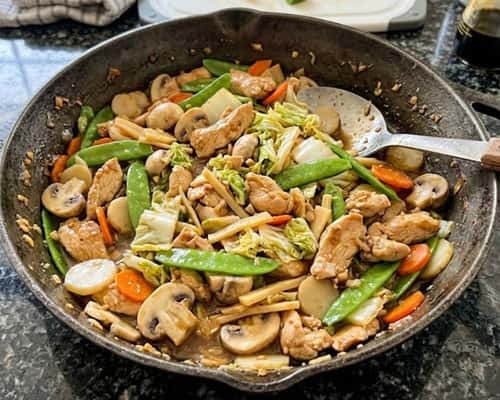
If you’ve been hunting for healthy Chinese stir fry ideas or easy stir fry meals that don’t feel boring, this one honestly checks a lot of boxes.
Ingredients Needed To Make Moo Goo Gai Pan Chinese Stir Fry
For the Chicken Marinade:
- 2 large boneless skinless chicken breasts, thinly sliced
- 1 tablespoon soy sauce
- 1 tablespoon cornstarch
- 1 teaspoon sesame oil
- 1/2 teaspoon white pepper
For the Stir Fry Sauce:
- 1 cup chicken broth
- 2 tablespoons low sodium soy sauce
- 1 tablespoon oyster sauce
- 1 teaspoon rice vinegar
- 1 teaspoon sugar
- 1 tablespoon cornstarch
- 1/2 teaspoon ginger powder
For the Stir Fry:
- 2 tablespoons oil
- 3 cups sliced white mushrooms
- 1 cup napa cabbage, chopped
- 1 cup snow peas
- 1 carrot, thinly sliced diagonally
- 1/2 cup bamboo shoots
- 1/2 cup water chestnuts
- 3 garlic cloves, minced
- 1 teaspoon fresh grated ginger
- 2 green onions, chopped
Step 1: Slice the Chicken Thin Like It Actually Matters
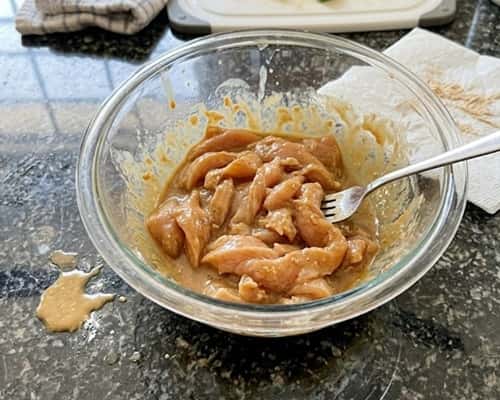
First thing, grab your chicken and slice it against the grain into thin strips. Not chunks.
Thin strips cook faster and stay softer, which is kinda the whole point here.
If your chicken feels slippery and annoying, freeze it for about 15 minutes first. Makes life easier.
Toss those slices into a bowl with soy sauce, cornstarch, sesame oil, and white pepper. Mix it real good till every piece looks lightly coated.
This quick marinade protects the chicken from drying out, and yes, that little detail changes stuff big time.
Let it sit for 15 to 20 minutes. Don’t skip because “it probably fine.” It ain’t.
Step 2: Mix the Sauce Before Chaos Begins
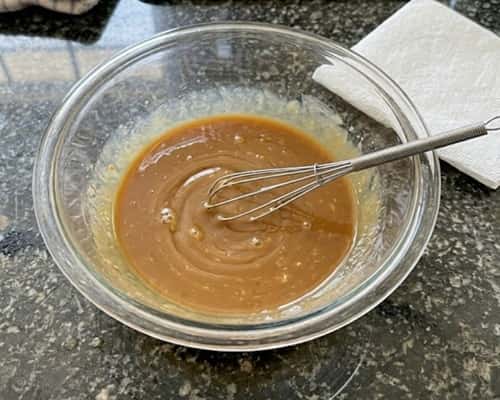
Now before heat enters the picture, whisk together chicken broth, soy sauce, oyster sauce, rice vinegar, sugar, cornstarch, and ginger powder in a bowl. Why now? Because stir fry moves fast.
Like, really fast. You wont have time later unless burning garlic is your hobby.
Stir until smooth. No lumps. Cornstarch likes to act rude and settle, so give it another stir right before pouring later too.
This sauce is lighter than heavier brown sauces, which is why moo goo gai pan Chinese stir fry often lands in the healthy Chinese stir fry category.
Step 3: Prep the Veggies Like You Mean It
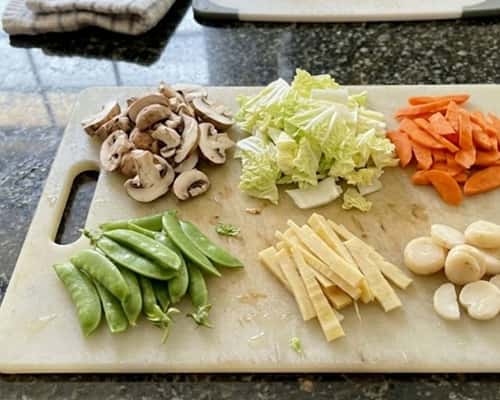
Slice mushrooms thick enough so they don’t disappear. Cut carrots diagonal because honestly, it looks better. Chop napa cabbage rough, not too tiny. Trim snow peas. Drain bamboo shoots and water chestnuts.
This colorful pile is where chinese veggie stir fry energy really starts showing off.
You could add broccoli, sure, but cabbage dinner recipe style napa gives this version a softer, more interesting texture.
Keep everything near the stove. Stir fry waits for nobody.
Step 4: Sear the Chicken Fast, Not Forever
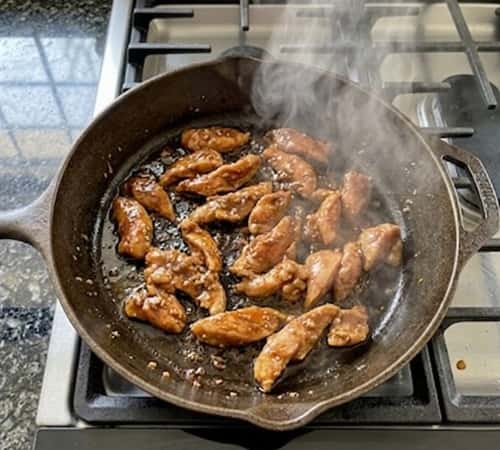
Preheat a large skillet or wok on medium-high heat. Add oil. Once shimmering, spread chicken in one layer. Hear that sizzle? Good. Don’t stir immediately. Let it get a little color first.
After about 1 to 2 minutes, stir and cook until mostly done. Not fully. It’ll finish later. Overcooked chicken can go weirdly rubbery, and nobody wants that sadness.
Remove chicken from pan and set aside.
You are building layers here, not just throwing stuff around.
Step 5: Build Flavor With Garlic, Ginger, and Veggies
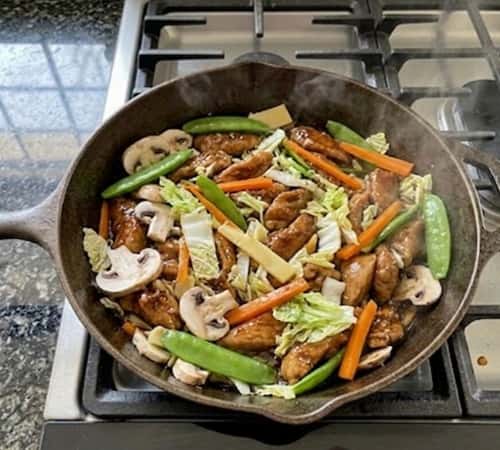
Same pan. Don’t wash it. That leftover flavor is gold.
Add a tiny splash more oil if needed, then toss in garlic and fresh ginger. Stir for maybe 20 seconds. Garlic burns quick, so dont walk away.
Add mushrooms first. They release moisture, which is normal. Then carrots, snow peas, cabbage, bamboo shoots, and water chestnuts.
Stir constantly but not aggressively. You want crisp-tender, not mush city. About 4 to 5 minutes usually does it.
Colors should stay bright-ish. If everything turns dull, you gone too far.
Step 6: Bring It All Together
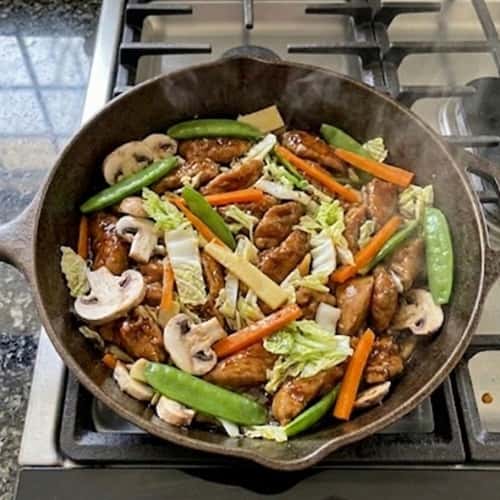
Return chicken to skillet. Give your sauce another whisk because cornstarch likes sinking, then pour it over everything.
Now stir. Watch it transform. Within 1 to 2 minutes, the sauce thickens into that glossy, silky coating that makes moo gai pan so craveable.
If it gets too thick, splash in broth. Too thin? Let it bubble a little longer.
This is where it starts looking like that easy to make Chinese food people swear is “better than takeout,” even if your mushroom slices look kinda uneven.
Finish with green onions.
Step 7: Plate It Without Overthinking
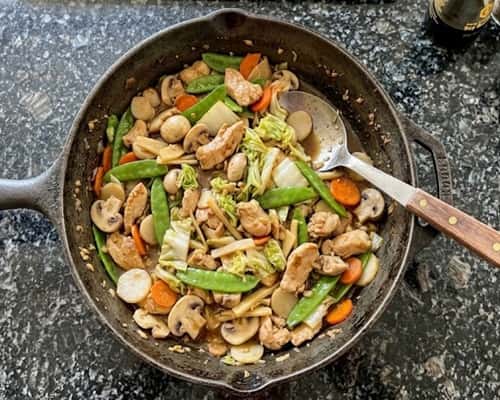
Scoop your moo goo gai pan Chinese stir fry into a large serving bowl or leave it rustic in the skillet. Serve with jasmine rice, brown rice, or honestly even cauliflower rice if that’s your thing.
Don’t aim for restaurant perfection. Slight messiness makes it feel real. The glossy sauce, tender chicken, and vegetables should do the talking anyway.
Funny enough, some of the best easy stir fry meals look a little imperfect. That homemade energy? It wins.
Final Thoughts
Moo Goo Gai Pan Chinese Stir Fry sits in that really useful middle ground between comfort food and practical cooking.
It’s one of those rare cabbage dinner recipe style meals that feels lighter without feeling boring, and that balance is probably why chicken gai kow style dishes have stayed around so long.
What makes this especially interesting is how adaptable it can be – swap veggies, adjust sauce, or lean more into chinese veggie stir fry territory depending on what’s sitting in your fridge.
Learning recipes like this isn’t just about dinner, it quietly teaches heat control, timing, and texture, which honestly can make almost any homemade stir fry better moving forward.