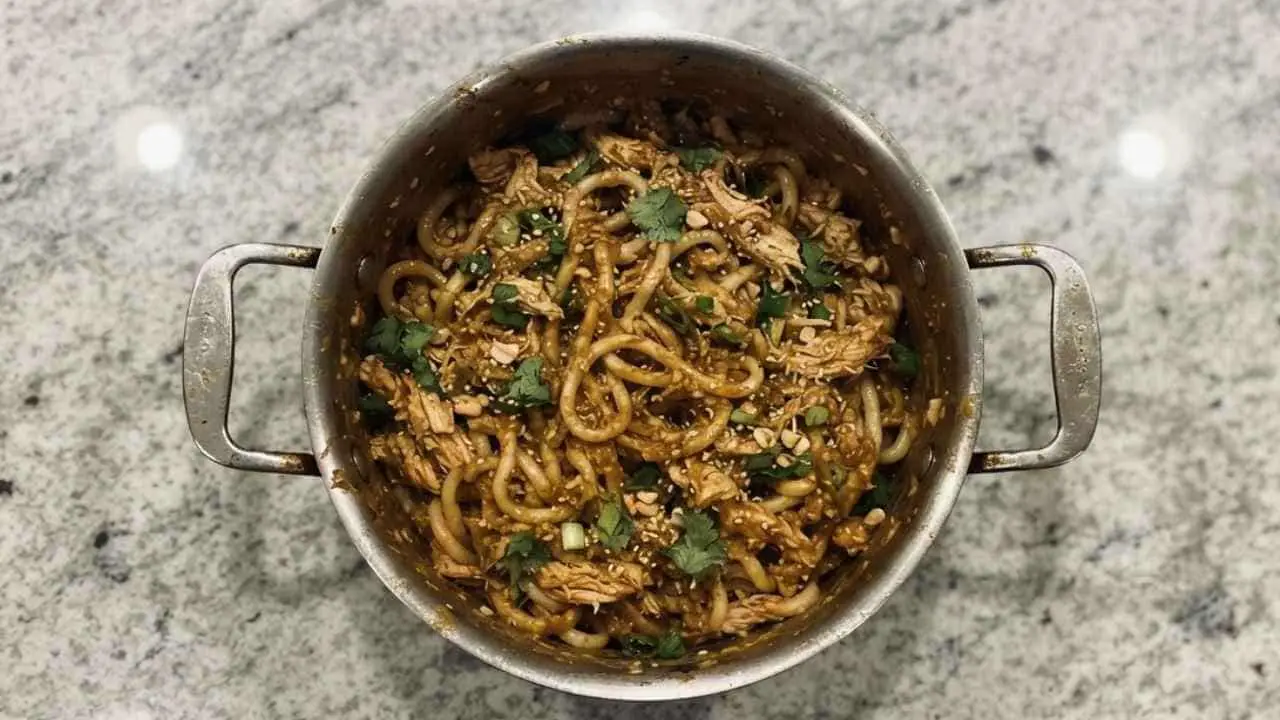
There’s something oddly comforting about sticky hoisin chicken sizzling in a pan late in the evening.
Just the scent is like a combination of homemade comfort food and takeaway night.
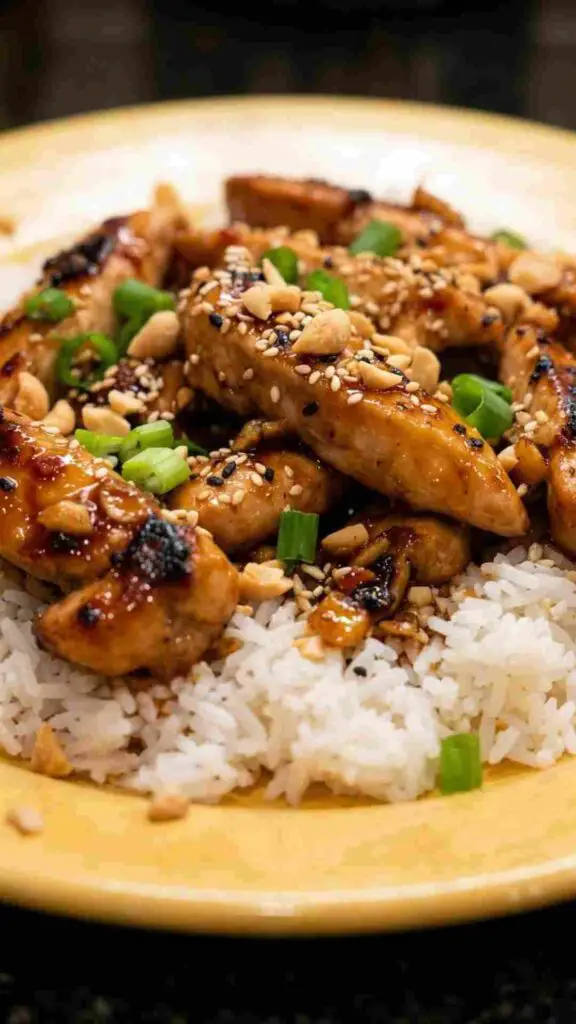
I began preparing this dish for hoisin chicken on sporadic hectic workdays when I wanted something quick and flavorful. And honestly? The burnt garlic twist changed everything.
It gives the sauce this smoky edge that regular hoisin chicken sometimes misses.
The sauce gets glossy, the juicy chicken stays tender, and the edges caramelize in the most chaotic beautiful way. Not fancy at all.
Just messy, sweet and spicy goodness sitting on a plate while everyone hovers around the stove asking if it’s ready yet.
Why This Hoisin Chicken Recipe Feels Different
Most hoisin chicken recipes lean overly sweet. Some taste almost like straight duck sauce poured over plain chicken.
This one balances things out better. You get salty, savory, sticky, smoky, garlicky heat all layered together.
And the texture? So important.
Instead of tiny dry cubes, we’re using bigger uneven strips of skinless chicken breast so the edges char while the inside stays juicy. The sauce clings harder that way. Little details matter more then people think.
This also works beautifully as a dinner recipe for busy parents because the marinade does most of the heavy lifting.
Ingredients Needed To Make Hoisin Chicken
For the Chicken Marinade
- 2 large skinless chicken breast, sliced into uneven strips
- 3 tablespoons hoisin sauce
- 1 tablespoon low sodium soy sauce
- 1 teaspoon sesame oil
- 1 tablespoon rice vinegar
- 1 tablespoon honey
- 1 teaspoon chili flakes
- 5 garlic cloves, finely chopped
- 1 teaspoon grated ginger
- 1 tablespoon cornstarch
- 1/2 teaspoon black pepper
- Small pinch salt
For the Burnt Garlic Glaze
- 2 tablespoons hoisin sauce
- 1 tablespoon duck sauce
- 1 teaspoon soy sauce
- 2 garlic cloves
- 2 tablespoons water
- Tiny squeeze lime juice
Optional Garnishes
- Toasted sesame seeds
- Green onions
- Crushed peanuts
- Chili oil drizzle
Step 1: Marinate the Chicken Properly
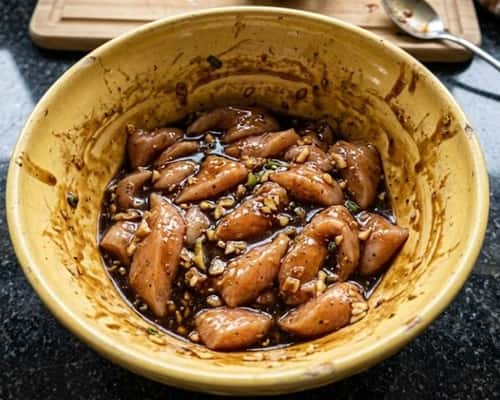
Grab a large bowl. Add the hoisin sauce, soy sauce, honey, sesame oil, vinegar, garlic, ginger, cornstarch, chili flakes, pepper, and salt. Mix until it turns thick and glossy.
Now toss in the chicken strips.
Use your hands. Seriously, it coats better. Every piece should look messy and sticky. If it feels too dry, add another spoon of hoisin sauce. Sometimes chicken absorbs more marinade then expected.
Let it rest for at least 30 minutes. Overnight tastes even deeper though. The marinated chicken slowly takes on that rich sweet and spicy flavor while staying tender.
Don’t skip the cornstarch. It creates those sticky caramelized edges later.
Step 2: Burn the Garlic Slightly
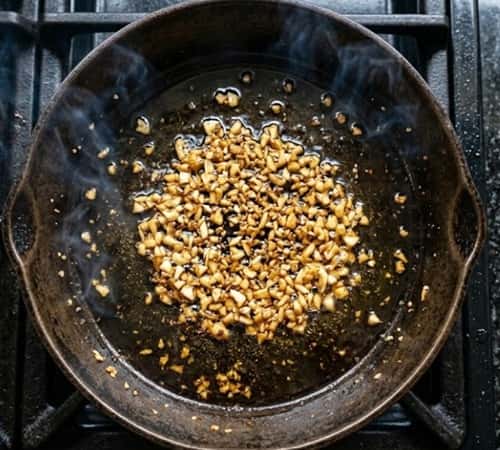
This sounds wrong. It isnt.
Heat a large pan over medium-high heat. Add a drizzle of neutral oil and toss in chopped garlic. Let it cook until deep golden brown with slightly darker edges.
Not black. Not raw. Somewhere dangerously close to smoky.
That burnt garlic flavor changes the entire hoison chicken vibe. Gives it depth that tastes almost restaurant style but still homemade.
Remove half the garlic for later garnish.
Step 3: Sear the Chicken Hard
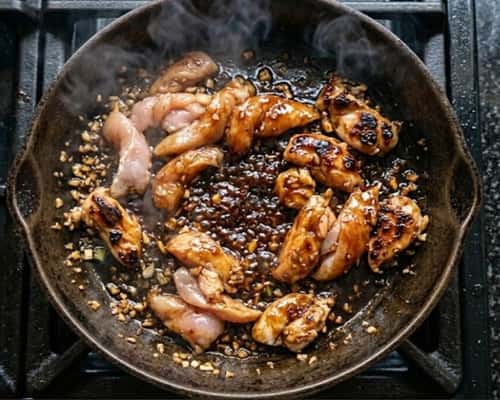
Place the marinated chicken into the hot pan in a single layer.
Do not stir immediately.
I know it’s tempting. Leave it alone for 2 minutes so the sugars start caramelizing. That sticky dark crust forming underneath? Thats flavor.
Flip once the edges look charred and glossy.
Cook in batches if needed because overcrowding creates steaming instead of caramelization. And steamed hoisin chicken is honestly disappointing.
The kitchen will smell ridiculous at this point.
Step 4: Make the Sticky Burnt Garlic Glaze
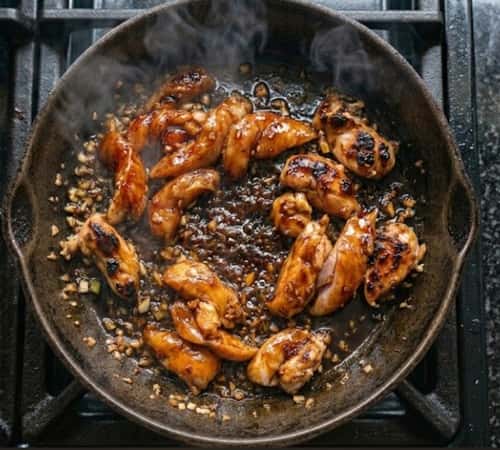
Lower the heat slightly.
In a small bowl mix hoisin sauce, duck sauce, soy sauce, water, lime juice, and remaining garlic. Pour it directly into the skillet over the chicken.
Everything should bubble almost instantly.
The glaze thickens very fast because of the sugars. Stir gently so every piece gets coated. If the sauce feels too thick, splash a spoon of water in there. No panic needed.
This part looks kinda chaotic but somehow becomes beautiful two minutes later.
Cook until glossy and sticky.
Step 5: Build Layers of Flavor
Now taste it.
Needs heat? Add chili oil.
Too sweet? Tiny splash rice vinegar.
Too salty? Small squeeze lime.
Cooking good healthy homemade recipes isn’t about blindly following measurements forever. Your stove, pan, and sauce brands all behave differently. Thats why tasting during cooking matters so much.
Scatter crushed peanuts and green onions over the top right before serving. The crunch cuts through the sticky glaze beautifully.
And yes, sesame seeds help too.
Step 6: Serve It While Sticky
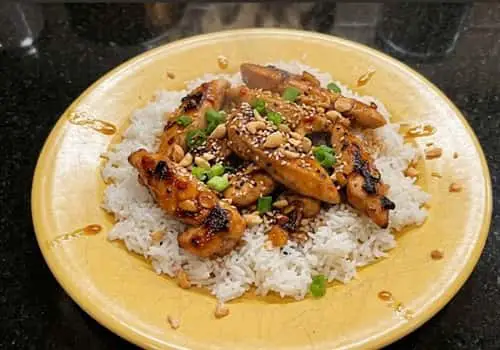
This hoisin chicken recipe tastes best immediately.
Pile it over jasmine rice, garlic noodles, or even roasted broccoli bowls. Sometimes I stuff leftovers into lettuce wraps the next day and somehow it tastes even better cold.
The sticky glaze slowly thickens as it cools, so don’t wait too long.
One weird trick I learned? Spoon a tiny amount of extra warm hoisin sauce over the top right before serving. Makes everything look shinier and fresher without extra effort.
People always thinks it came from a takeout place.
What Makes This Hoisin Chicken Recipe Work So Well
The balance.
Hoisin sauce alone can become heavy and overly sugary if not balanced carefully.
The vinegar, lime, burnt garlic, and chili all pull the flavor back into something richer and more layered. Almost smoky-sweet instead of candy sweet.
Bigger chicken pieces also matter way more then tiny cubes. They stay juicy longer and develop those crispy sticky corners people fight over first.
Another underrated trick is letting the sauce reduce naturally instead of thickening it aggressively. Fast shortcuts usually creates gummy sauce textures nobody really likes.
Final Thoughts
Hoisin chicken sits in this interesting middle ground between comfort food and quick weeknight survival cooking. That’s probably why people keep coming back to it.
The sauce feels familiar but there’s room to experiment endlessly depending on how smoky, spicy, sticky, or tangy you want it.
One thing many home cooks overlook is how much texture changes flavor perception.
Crispy edges, burnt garlic bits, glossy sauce, soft rice underneath – your brain experiences all of that together. That’s why restaurant dishes often feel more exciting even when the ingredients are simple.
Tiny contrasts create bigger flavor memories. And honestly, slightly imperfect homemade hoisin chicken usually tastes better anyway.