There’s something wildly comforting about a messy skillet full of glossy chicken, smoky peppers, crunchy peanuts, and that sticky spicy sauce clinging to every bite.
This kung pao chicken recipe started as my lazy Friday night fix and slowly turned into one of those dinners everyone asks for again.
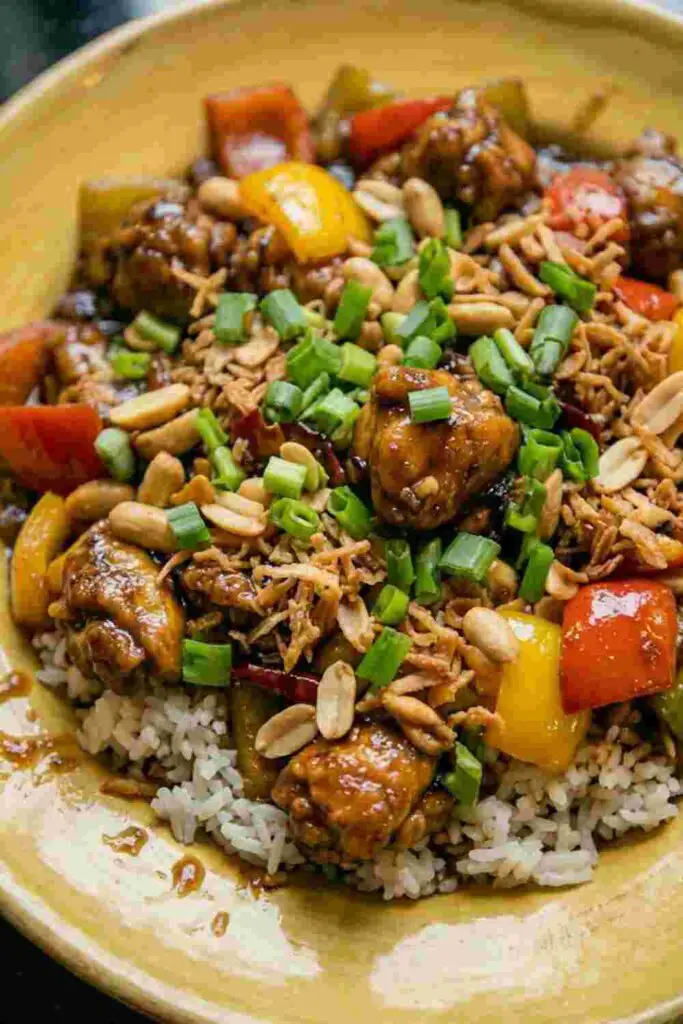
I wanted it bold, slightly sweet, unapologetically garlicky, and different from the usual takeout style.
So I added charred red peppers, crispy shallot bits, and a little honey for balance. Sounds odd? Maybe. But wow, it works.
This homemade kung pao chicken dinner tastes fiery, savory, nutty, and cozy all at once. And honestly, the leftovers be disappearing fast around here.
Why This Kung Pao Chicken Feels Different
Most kung pao chicken recipes focus only on heat. This one leans into texture too. You get:
- Crispy-edged chicken
- Toasted peanuts
- Slightly blistered peppers
- Sticky glossy sauce
- Tiny crunchy shallot bits
- Real wok-style flavor without needing a wok
It’s basically a quick kung pao chicken with personality.
Ingredients Needed To Make Kung Pao Chicken
For The Chicken Marinade
- 700g boneless chicken thighs, diced small
- 1 tablespoon soy sauce
- 1 tablespoon dark soy sauce
- 1 teaspoon sesame oil
- 1 tablespoon cornstarch
- 1/2 teaspoon white pepper
For The Sauce
- 3 tablespoons soy sauce
- 2 tablespoons rice vinegar
- 1 tablespoon honey
- 1 tablespoon brown sugar
- 1 teaspoon chili oil
- 1 tablespoon hoisin sauce
- 3 tablespoons water
- 1 teaspoon cornstarch
For Stir Fry
- 2 tablespoons oil
- 6 dried red chilies
- 1 red bell pepper, diced
- 1 green bell pepper, diced
- 5 garlic cloves, chopped
- 1 tablespoon ginger, finely chopped
- 1 medium onion, cubed
- 1/2 cup roasted peanuts
- 2 shallots, thinly sliced
- 2 green onions, chopped
Step 1: Marinate The Chicken Properly
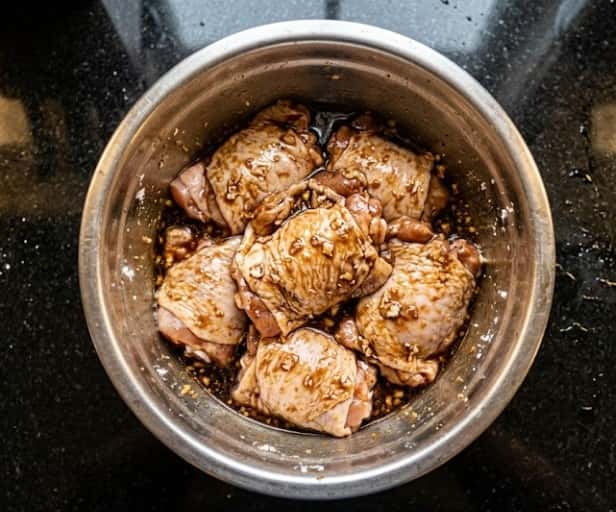
Throw the diced chicken into a bowl. Add soy sauce, dark soy, sesame oil, cornstarch, and white pepper.
Mix with your hands because spoons dont coat evenly sometimes. Every piece should look glossy and lightly sticky.
Now leave it alone for at least 20 minutes. Longer is even better. The cornstarch creates that silky coating you usually only get from restaurant-style Asian main dish recipes. Smells weirdly good already, right?
Do not skip the dark soy sauce here. That deeper color gives the kung pao chicken its rich caramelized appearance later.
Step 2: Toast The Peanuts and Shallots
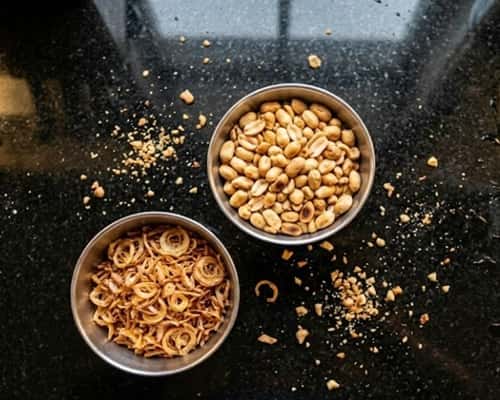
Heat a pan on medium-low. Add peanuts first. Stir slowly for 2–3 minutes till they smell nutty and warm. Remove them.
Next toss in sliced shallots with a tiny splash of oil. Cook until golden and crisp around the edges. Not burnt. Burnt shallots taste sad honestly.
These crispy shallots are the twist. Tiny thing, massive flavor.
Your kitchen should smell like a tiny street food stall by now.
Step 3: Mix The Sauce
In a bowl combine soy sauce, rice vinegar, honey, brown sugar, chili oil, hoisin sauce, water, and cornstarch.
Whisk it until smooth. The sauce should look thin now. Don’t panic, it thickens later when it hits the hot pan. Happens every time.
Taste a tiny drop carefully. Sweet first, salty second, heat sneaks in after. Thats the magic balance for an easy kung pao chicken dish.
If you like a spicy kung pao chicken meal, add extra chili oil now instead of later.
Step 4: Sear The Chicken Hard
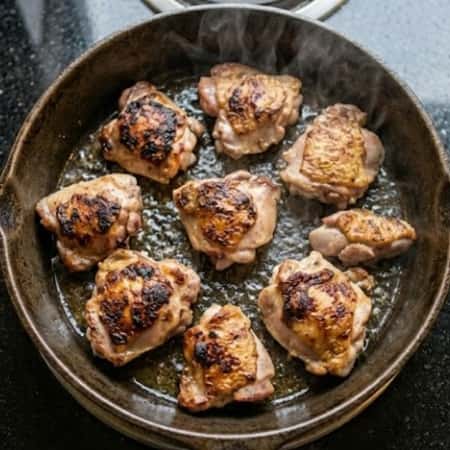
Heat oil in a large skillet until slightly smoky. Lay the chicken pieces in one layer. Don’t crowd the pan or it steams instead of browning.
Leave it untouched for 2 minutes. Seriously. Stop stirring it every second.
Flip and cook another 4 to 5 minutes until edges get dark golden with tiny charred spots. Some uneven browning is actually perfect for this dinner recipe.
If the pan gets sticky, thats flavor building up.
Step 5: Build The Stir Fry Flavor
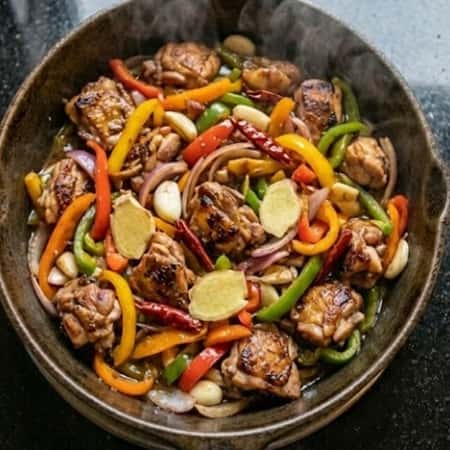
Push chicken to one side. Add dried chilies, garlic, ginger, onions, and bell peppers.
The dried chilies puff up fast so keep moving them around. If garlic burns, start over because bitter garlic ruins the whole thing. Yeah, learned that the annoying way.
Cook everything for 3 to 4 minutes until peppers blister slightly but still stay vibrant.
This part smells absolutely insane. Sweet, smoky, spicy, garlicky. Proper traditional chinese stir-fry recipe energy happening here.
Step 6: Pour The Sauce and Finish
Give the sauce one more whisk because cornstarch settles fast.
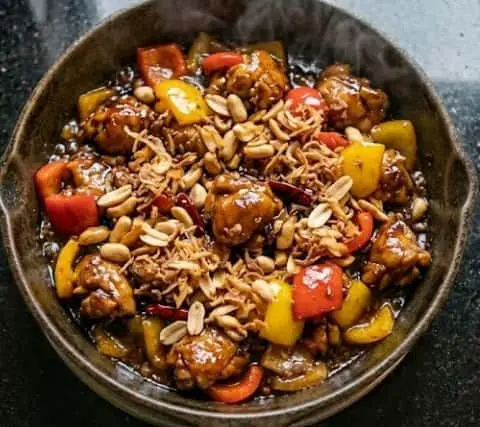
Pour it into the skillet. Immediately toss everything together. Within about 90 seconds the sauce transforms into this glossy coating that hugs every piece of chicken. It kinda looks sticky and dramatic in the best way.
Add toasted peanuts and crispy shallots right at the end.
Some people dump peanuts earlier but then they lose crunch. We dont want sad peanuts here.
Scatter green onions over the top and turn off the heat.
Step 7: Serve It Like A Cozy Homemade Feast
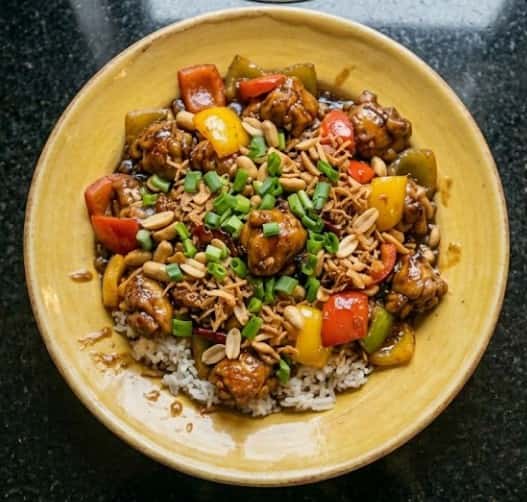
Pile the kung pao chicken over hot jasmine rice or spoon it beside garlic noodles. I sometimes add cucumber slices because the cool crunch balances the heat beautifully.
And please serve immediately. This dish waits for nobody.
The sauce gets shinier after 2 minutes sitting, weirdly enough. Not sure why but it always does.
A spoonful of extra chili crisp on top makes the whole thing feel restaurant-level while still looking beautifully homemade.
What Makes This Version Of Kung Pao Chicken Stand Out
This isn’t trying to copy takeout. That was never the point.
The crispy shallots bring crunch. Honey rounds out the sharp vinegar notes. The slightly blistered peppers add smoky sweetness. And the sauce stays glossy instead of heavy.
It tastes layered. Like something from a tiny family-run spot tucked into a busy alley somewhere.
Also, the imperfect texture actually makes it feel more homemade and comforting. Too-perfect stir fry sometimes looks fake to me.
Final Thoughts
Kung pao chicken actually teaches a pretty smart cooking principle once you notice it – contrast creates excitement.
Crunch against sticky sauce. Sweetness cutting through spice. Smoky edges beside fresh green onions.
That’s why this dish never feels boring even after several bites. A lot of beginner cooks think recipes succeed because of complicated ingredients, but honestly it’s usually balance and timing doing the heavy lifting.
This homemade kung pao chicken dinner proves you can build massive flavor using basic pantry stuff and one hot skillet.
And when the sauce clings properly to the rice? Whew. Thats the kind of dinner people remember the next day.