There’s something weirdly comforting about a homemade garlic herb pork loin sitting in the middle of the table while everybody keeps sneaking slices before dinner even starts.
I started making this version after getting tired of dry pork tenderloin roast recipes that looked pretty online but tasted flat in real life.
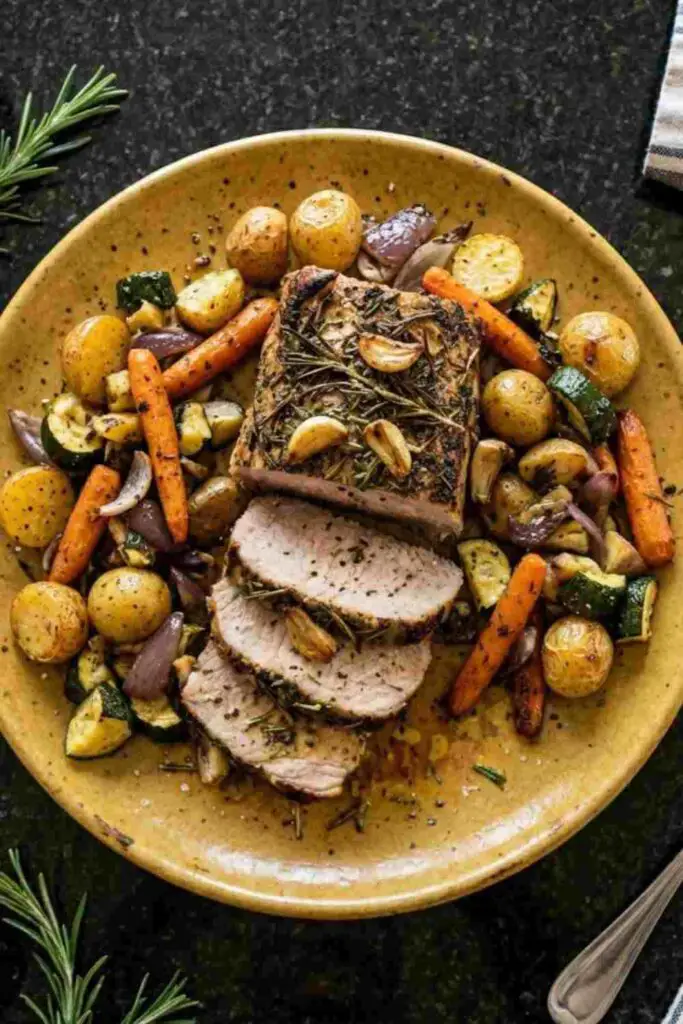
This one is juicy, buttery, deeply garlicky, and packed with fresh herbs that crisp around the edges while roasting.
The roasted vegetables soak up all those drippings too. Honestly, the pan smells insane halfway through cooking.
If you’ve been hunting for a cozy dinner recipe that feels homemade instead of restaurant-perfect, this garlic herb pork loin delivers every single time.
Why This Garlic Herb Pork Loin Feels Different
Most pork tenderloin dinner recipes rely only on seasoning. This one builds flavor in layers.
First comes a garlic herb paste. Then a quick stovetop sear. Then butter melts slowly over the pork while the vegetables roast underneath and catch every drop of flavor.
And yeah, the crispy lemon-herb butter drizzle at the end? Thats the little twist that makes people ask for the recipe.
This also works beautifully as:
- pork tenderloin roast in oven
- oven roasted pork tenderloin with vegetables
- sheet pan pork tenderloin with potatoes and herbs
- cozy weekend dinner recipe
- rustic family-style pork tenderloin recipe
Ingredients Needed To Make Garlic Herb Pork Loin
For The Pork
- 2 to 2½ pound pork loin
- 6 garlic cloves, finely mashed
- 2 tablespoons softened butter
- 2 tablespoons olive oil
- 1 tablespoon chopped rosemary
- 1 tablespoon chopped thyme
- 1 teaspoon chopped sage
- 1 teaspoon smoked paprika
- 1 teaspoon coarse salt
- ¾ teaspoon black pepper
- ½ teaspoon onion powder
- zest from 1 small lemon
For The Vegetables
- 3 cups baby potatoes, halved
- 2 carrots, sliced thick
- 1 red onion, chunked
- 1 zucchini, sliced
- 2 tablespoons olive oil
- salt and pepper
Crispy Herb Butter Finish
- 2 tablespoons butter
- pinch rosemary
- pinch thyme
- tiny squeeze lemon juice
Step 1: Prep The Pork Like You Mean It
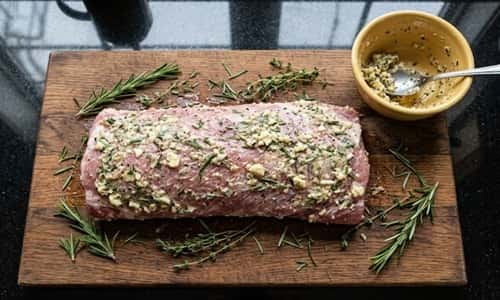
Take the pork loin out about 30 minutes before cooking. Cold pork straight into heat cooks unevenly and nobody likes dry centers. Pat it very dry using paper towels. Seriously dry. Moisture ruins browning.
Now grab a bowl. Mix garlic, softened butter, olive oil, rosemary, thyme, sage, paprika, salt, pepper, onion powder, and lemon zest into a thick messy paste. It won’t look fancy. Thats okay.
Rub the mixture all over the pork using your hands. Push some into every little crack.While you prepare the vegetables, let it sit.
The smell already starts hitting different here.
Step 2: Chop Vegetables Without Overthinking It
Slice potatoes in halves. Thick carrots work better than thin ones because they roast slower and stay sweet. Chunk the onion roughly. Uneven cuts actually make the tray look more homemade and rustic.
Toss vegetables with olive oil, salt, and pepper directly on your baking tray. Don’t overcrowd them though. If vegetables pile up, they steam instead of roast. Learned that one the annoying way.
Spread everything around the edges so the pork can sit in the middle later.
No perfection needed here. Rustic works better honestly.
Step 3: Sear The Pork For That Deep Golden Crust
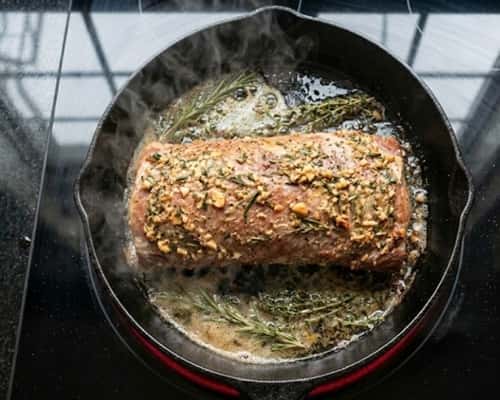
Heat a heavy skillet until properly hot. Not warm. Hot-hot.
Place the pork loin into the pan carefully. It should sizzle loud immediately. If it doesn’t, wait longer next time. Sear each side for about 2 minutes until golden brown patches form.
You are not cooking it fully yet. Just building flavor.
Some herbs may darken quickly and look slightly burnt. Thats normal and actually tastes incredible later.
Your kitchen gonna smell ridiculous at this point.
Step 4: Build The Sheet Pan
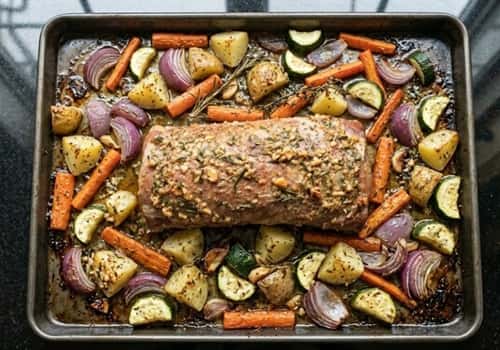
Place the seared pork loin in the center of the vegetable tray. Spoon every leftover buttery herb bit from the skillet over the top. Don’t waste any of it. That’s flavor sitting right there.
Add tiny cubes of butter over the vegetables too. Sounds extra maybe, but the potatoes absorb everything while roasting.
Roast at 400°F (200°C) for about 45 to 55 minutes depending on thickness. Halfway through, spoon pan juices over the pork again.
If the vegetables start looking too dark early, loosely tent with foil.
And please don’t stab the pork every five minutes checking it. Let it cook.
Step 5: Know When The Pork Is Actually Done
This part matters alot.
Use a meat thermometer if possible. Pull the pork out when the thickest part reaches 145°F. It keeps cooking while resting.
Rest it uncovered for 10–15 minutes minimum.
If you slice too early, juices run everywhere and the pork dries out. Been there. Hurt my feelings honestly.
During resting time, the garlic crust settles and the butter thickens around the vegetables. That’s when everything gets ridiculously good.
Step 6: Make The Crispy Lemon Herb Butter
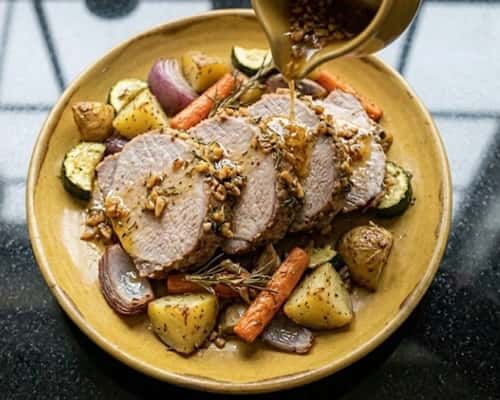
Tiny extra step. Massive payoff.
Melt butter in a small pan. Add rosemary and thyme. Let it bubble until little browned bits appear. Add a small squeeze of lemon juice right at the end.
Drizzle this over sliced pork just before serving.
That sharp buttery herb flavor wakes the entire pork tenderloin roast up in a way plain gravy never could.
Step 7: Slice And Serve Family Style
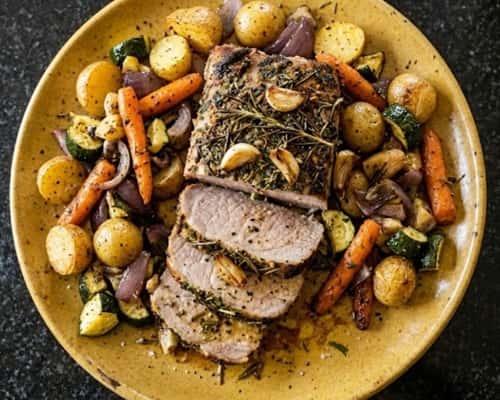
Slice the pork thick, not paper thin. Thick slices stay juicy longer.
Spoon roasted vegetables around the plate. Drizzle extra buttery juices over everything. A little crusty bread on the side works dangerously well here because people start wiping the plate clean without realizing.
This garlic herb pork loin pairs beautifully with:
- roasted garlic mashed potatoes
- butter rice
- grilled asparagus
- warm bread
- creamy parmesan beans
And leftovers? Honestly maybe better the next day stuffed into sandwiches.
Final Thoughts
One thing most people don’t realize about pork loin is how much moisture it naturally carries when cooked correctly.
It doesn’t actually need complicated marinades or sugary glazes to taste rich. Heat control matters more than fancy ingredients. That’s why this garlic herb pork loin works so well for home cooks.
The herb butter slowly protects the meat while roasting, and the vegetables underneath create steam and flavor at the same time. Kinda like a built-in safety net for beginners.
Also, slightly imperfect roasting usually tastes better than overly polished cooking. Those crispy uneven garlic bits and caramelized edges? Thats where the real flavor hides.