You’ve tasted a hundred Caesar salads.
But have you ever made the Caesar dressings from scratch, from actual scratch, and felt the difference hit you in the first bite? That’s what this guide is about.
Homemade Caesar dressing recipes aren’t just about mixing ingredients, they’re about understanding why each element exist and what it does to the final flavor.
Whether you’re eating keto, going dairy-free, managing IBS, or just tired of the bottle, this pillar guide walks you through every major variation i.e. with full instructions, real tips, and zero fluff.
The True Origin of Caesar Dressing (Most People Get This Wrong)
Here’s a question – did Julius Caesar invent Caesar dressing? Nope. Not even close.
The dressing was actually created by Caesar Cardini, an Italian immigrant and restaurateur, in Tijuana, Mexico around 1924.
The story goes that on a Fourth of July weekend, Cardini ran low on supplies and improvised with what was left: romaine lettuce, olive oil, egg, lemon, Worcestershire sauce, Parmesan and croutons. He tossed it tableside. Guests loved it.
That’s the whole origin – a happy accident born from scarcity, like most great things in food.
His original dressing, famously, did not have anchovies. That came later as other chefs added their own spins.
But the emulsion technique – that slow, careful pull of fat into liquid – that’s always been the heart of it.
Why does origin matter? Because it explains why Caesar dressing is so adaptable. It was improvised from the beginning.
It was designed to work with what you had. Which is exactly why today, you can make a killer Caesar with cashews, or avocado, or coconut cream, or garlic-infused oil – and it still absolutely works.
Fun fact: Caesar Cardini’s daughter Rosa maintained that the original recipe never included anchovies. The Worcestershire sauce alone provided that briny, umami depth – which itself contains anchovies. So technically… it was anchovy-adjacent from the start.
The Science Behind the Creaminess – What Is an Emulsion, Really?
Before you can make a great Caesar dressing – any version of it – you need to understand one thing: emulsion. This is non-negotiable. This is why bottle dressings taste flat and why homemade ones taste alive.
An emulsion is when two liquids that don’t naturally mix (oil and water-based liquids like lemon juice) are forced together into a stable, uniform blend.
Fat droplets are surrounded by emulsifiers – usually lecithin from egg yolk – and held in suspension.
That’s what makes the dressing creamy instead of oily. That’s why it coats the lettuce instead of pooling at the bottom of the bowl.
What acts as the emulsifier in each variation?
| Classic Caesar | Egg yolk (lecithin) |
| Vegan / Cashew Caesar | Cashew fat + blending action |
| Avocado Caesar | Avocado’s natural fat and fiber structure |
| Greek Yogurt Caesar | Protein in yogurt acts as partial emulsifier |
| Coconut Cream Caesar | Coconut fat + blending |
| Keto Bacon Fat Caesar | Rendered bacon fat + Dijon mustard |
Dijon mustard is the unsung hero across almost every version.
It contains compounds called mucilage that help stabilize the emulsion, meaning even when your egg yolk is doing the heavy lifting, a teaspoon of Dijon is quietly holding everything together. Always add it. Don’t skip it.
Temperature matters too. Ingredients at room temperature emulsify better than cold ones.
This is why every serious Caesar recipe tells you to take that egg yolk out of the fridge early.
Cold fat added too fast is the number one reason homemade dressings break.
1. The Classic Homemade Caesar Dressing – Master This First
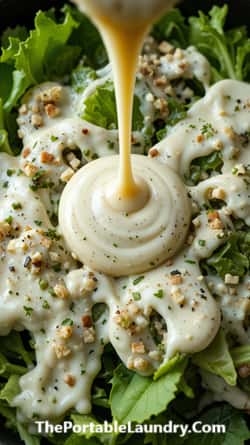
Everything else in this guide branches off from this. Before you go keto or vegan or Mediterranean, learn the classic. It teaches you the technique that all the others borrow from.
We cover the full deep-dive on the classic method i.e. including the mortar and pestle technique, the double-cheese approach, and why duck egg yolks are worth hunting for – in our Ultimate Guide to Caesar Dressing. Go read that first if you’re a complete beginner.
2. Low-FODMAP Caesar Dressing – Same Garlic Punch, Zero Gut Drama
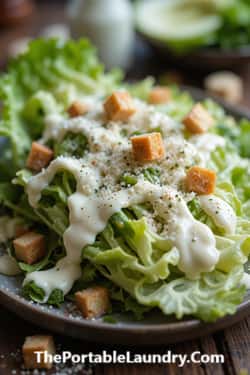
If you’ve been managing IBS or following the FODMAP elimination protocol, you already know the gut punch of finding out that garlic is one of the highest-FODMAP ingredients that exists.
Traditional Caesar dressing is basically a garlic delivery system. So what do you do?
You use garlic-infused oil. And it’s not a compromise – it’s actually brilliant. The fructans in garlic (the FODMAP culprit) are water-soluble, not fat-soluble.
This means they don’t leach into oil. So when you infuse oil with garlic and then remove the cloves, you get full garlic flavor with zero FODMAP trigger. Honestly, it’s one of the neatest food science tricks there is.
The full step-by-step method for making garlic-infused oil and building the complete low-FODMAP Caesar from scratch here: Low-FODMAP Caesar Dressing with Garlic-Infused Oil.
3. Cashew Caesar Dressing – The Dairy-Free Version That Converts Even Skeptics
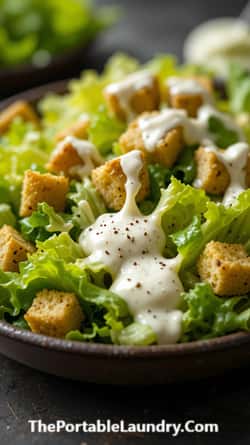
Let me be honest with you. A lot of dairy-free Caesar recipes are just… sad.
They swap out the Parmesan for nutritional yeast and hope nobody notices the texture is all wrong.
This cashew version is genuinely different. Raw cashews, when soaked and blended properly, create a base so creamy that people who aren’t even dairy-free prefer it.
The full soaking method, the exact blend time, and all the troubleshooting tips are in our dedicated post: Cashew Caesar Dressing – Dairy-Free. Here’s the essentials:
4. Greek Yogurt Caesar Dressing – Light, Tangy, Protein-Packed
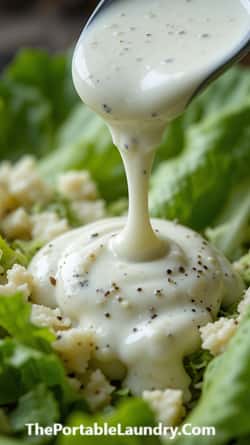
If you want all the creaminess of classic Caesar with less fat and more protein, Greek yogurt is your answer. We’ve built a full recipe around this in our Greek Yogurt Caesar Dressing post.
The short version:
Full-fat Greek yogurt replaces most of the olive oil in the classic recipe. The result is a lighter, slightly tangier dressing that still coats romaine beautifully.
It’s not low-calorie (Greek yogurt isn’t diet food), but it’s genuinely more nutritious – you’re getting protein, probiotics, and calcium along with your salad.
Note: Swap out the anchovies for a teaspoon of capers and a pinch of smoked paprika if you want a pescatarian-friendly version. It still tastes completely Caesar-like, I’d swear by it.
5. Avocado Caesar Dressing – Green, Creamy, and Genuinely Addictive
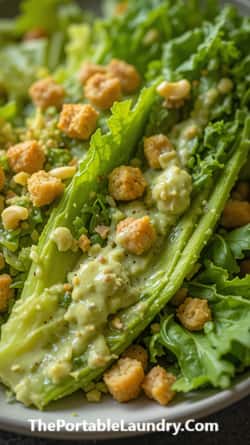
This one surprises people every single time. You’d think adding avocado would make Caesar dressing taste like guacamole. It doesn’t.
What it does is add this extraordinary velvety texture and a subtle richness that complements the tang of lemon and the bite of garlic. Read the full recipe on our Avocado Caesar Dressing Recipe post.
6. Shrimp Caesar Salad with Smoky Avocado Dressing – When the Dressing Becomes the Meal
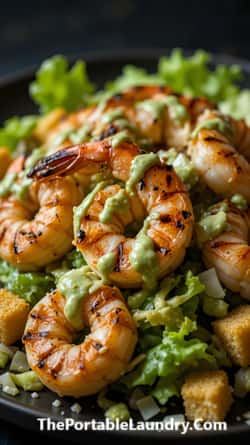
Caesar dressing isn’t just for salads, technically, but when you ARE making a salad – why not make it a full meal? This is one of the most complete Caesar applications in this cluster, because the smoky avocado dressing here bridges two categories: it’s creamy like a classic Caesar but smoky and green from the avocado and chipotle influence.
The full recipe with all the shrimp preparation techniques is at Shrimp Caesar Salad with Smoky Avocado Dressing.
The Core Build (Serves 2 as a main)
- 1 lb large shrimp (21-25 count), peeled and deveined – pat completely dry before cooking or they’ll steam instead of sear
- 1 teaspoon smoked paprika + ½ teaspoon garlic powder + salt – rub this onto the shrimp
- 2 tablespoons olive oil for the pan, very hot before the shrimp go in
- 2 romaine hearts, chopped or left whole (whole romaine halves grilled for 1-2 minutes is stunning here)
- Avocado Caesar dressing as made above
- Shaved Parmesan, croutons, and lemon wedges to finish
Cook shrimp 2 minutes per side maximum in a screaming-hot cast iron pan. They overcook fast.
The moment both sides are pink and the tails have curled into a loose C-shape, they’re done.
Tight C means overcooked. Straight means undercooked. Remember this – it applies to every shrimp you’ll ever make.
7. Smoky Chipotle Caesar Dressing – Mexican-Inspired and Genuinely Game-Changing
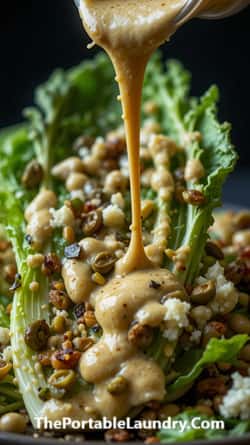
Who decided Caesar dressing has to stay inside European flavor boundaries? Not me.
This chipotle version takes the classic emulsion technique and drops it into a south-of-the-border flavor profile. And it works so well it almost feels obvious in hindsight.
The story behind this recipe – including a dinner party that changed everything – is all in the full post: Smoky Chipotle Caesar Dressing.
What Makes It Different
Three additions shift this from Italian-American to Mexican-inspired without breaking the Caesar template:
- Chipotle peppers in adobo sauce – 2 peppers plus 1 tablespoon of the sauce. This is the smoke. Use 1 pepper if you’re heat-sensitive; the adobo sauce alone gives flavor without as much heat.
- Mexican oregano – genuinely different from Mediterranean oregano. It’s more citrusy, slightly more pungent. Worth tracking down at any Latin grocery store.
- Roasted poblano pepper, tomatillo, and toasted pepitas – these three together add earthiness, tartness, and crunch that make the dressing texturally interesting beyond just creamy.
8. Caesar Dressing with a Mediterranean Olive Twist – For the Olive Obsessed
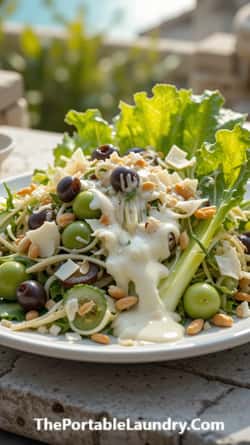
What happens when you take the classic Caesar and pull it toward the Mediterranean? You get something that feels at home on a meze table but still absolutely works as a salad dressing. The full recipe is in our dedicated post: Caesar Salad Dressing with Mediterranean Olive Twist.
The Key Flavor Shifts
- Replace ¼ of the olive oil with a good quality olive tapenade blended smooth — this adds brininess, richness, and a flavor complexity that no amount of extra garlic can replicate
- Use a mix of Kalamata olive brine and lemon juice as your acid instead of just lemon – the brine is a secret weapon
- Add 1 teaspoon of fresh or dried oregano – Mediterranean, not Mexican
- Finish with crumbled feta instead of Parmigiano for a sharper, saltier hit
- A small pinch of sumac on top when serving adds a floral, tart note that elevates the whole thing
This version is particularly good on grain bowls, roasted cauliflower, or chickpea salads. It goes places the classic Caesar doesn’t even think about.
9. Coconut Cream Caesar Dressing – The Unexpected One That Actually Works
This one raises eyebrows. Coconut cream in Caesar dressing? But read our full post on Coconut Cream Caesar Dressing before you dismiss it.
Full-fat coconut cream has a neutral-to-slightly-sweet fat profile that emulsifies beautifully and doesn’t taste overtly coconutty when paired with strong flavors like garlic, anchovy, and lemon.
The key is using full-fat coconut cream (not coconut milk – too thin), chilled so the cream separates to the top, and using only that thick cream.
The Critical Ratio
- ½ cup full-fat coconut cream (chilled, thick top layer only)
- 2 tablespoons extra virgin olive oil
- 2 garlic cloves
- 2 anchovy fillets or 1.5 teaspoons anchovy paste
- 1 tablespoon Dijon mustard
- 2 tablespoons fresh lemon juice
- 1 tablespoon nutritional yeast (replaces Parmesan for vegan version)
- Salt, pepper
- Blend everything except the oil on medium until smooth.
- Slowly drizzle in olive oil with blender running to create the emulsion.
- Taste – you may need more lemon than you expect to balance the coconut’s natural sweetness.
- Chill for 30 minutes before serving. The dressing firms up in the fridge but loosens at room temperature. Store up to 5 days.
This version is naturally dairy-free and works well in tropical-leaning salads – try it with grilled mango, butter lettuce, and grilled prawns instead of the traditional romaine setup.
10. Keto Bacon Fat Caesar Dressing – The High-Fat, Zero-Compromise Version
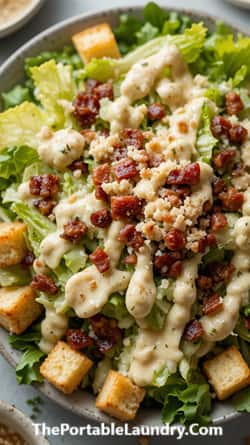
If you’re eating keto, you don’t just want fat – you want the right fat, with maximum flavor. Enter: bacon fat Caesar dressing.
The full recipe and macro breakdown is in our dedicated post: Keto Bacon Fat Caesar Dressing.
Rendered bacon fat is liquid gold. It carries an irreplaceable smoky, porky depth that makes you rethink the limits of what Caesar dressing can taste like.
The trick is rendering the bacon properly and using the fat while still warm enough to remain liquid – otherwise it solidifies and the emulsion won’t form.
Keto tip: Serve over romaine with crispy bacon bits (the reserved bacon), soft-boiled eggs, shaved Parmesan, and pork rind croutons instead of bread. Total carbs: practically zero. Total satisfaction: maximum.
At a Glance: Which Caesar Dressing Is Right for You?
| Variation | Dietary Fit | Fat Source | Difficulty | Best For |
|---|---|---|---|---|
| Classic | Omnivore | Olive oil + egg | Medium | Traditional salads, starting point |
| Low-FODMAP | IBS / FODMAP | Garlic-infused oil | Medium-High | Digestive-friendly meal prep |
| Cashew / Dairy-Free | Vegan, Dairy-Free | Cashews | Medium | Plant-based diets, wraps |
| Greek Yogurt | Vegetarian | Yogurt + light oil | Easy | Lighter everyday dressing |
| Avocado | Vegan option | Avocado + olive oil | Easy | Green salads, bowls |
| Chipotle | Omnivore / Vegan opt. | Olive oil + egg | Medium | Tacos, Mexican-inspired bowls |
| Mediterranean | Mediterranean diet | Olive oil + tapenade | Easy-Medium | Grain bowls, mezze |
| Coconut Cream | Vegan, Dairy-Free | Coconut cream | Medium | Tropical salads, SE Asian fusion |
| Keto Bacon Fat | Keto / Low-Carb | Bacon fat + olive oil | Medium-High | Keto salads, high-fat meals |
Troubleshooting Caesar Dressing – Everything That Can Go Wrong (and How to Fix It)
Why did my dressing break?
Because the oil was added too fast, or the ingredients were too cold, or both. Fix it by starting with a fresh egg yolk in a clean bowl and whisking the broken dressing in, drop by drop. It comes back together. If it doesn’t, you may have added way too much oil for the amount of emulsifier present – start completely fresh.
Why does my dressing taste flat?
You need more acid (lemon juice), more anchovy, or more salt. Taste in sequence. A flat dressing is almost always under-seasoned or under-anchovy’d. Don’t be shy with the anchovies – they don’t taste fishy in a finished dressing. They taste savory and round and deep.
Why is my dressing too thick?
Add water, one teaspoon at a time, until you reach your preferred consistency. Never thin with more oil – that just makes it richer without fixing the texture.
Why is my garlic-infused oil not working for the FODMAP version?
Did the garlic brown? If the oil got too hot and the garlic browned, the flavor is compromised and you may have introduced FODMAP compounds through the Maillard reaction. Start the infusion again at a lower temperature and watch it the whole time.
My cashew dressing isn’t creamy enough – why?
Either the cashews didn’t soak long enough, or your blender isn’t powerful enough to fully break down the cell walls. Soak overnight. If using a standard blender, blend for at least 5 minutes, stopping every 90 seconds to rest the motor and scrape the sides.
My bacon fat dressing solidified in the fridge – is it ruined?
No, that’s expected. Bacon fat is solid below room temperature. Set the jar in warm water for a few minutes or leave it at room temperature for 15 to 20 minutes, then whisk vigorously. It comes right back.
How to Store Homemade Caesar Dressing – A Shelf Life Guide
| Classic (egg yolk) | Up to 3 days – raw egg yolk means shorter shelf life |
| Low-FODMAP (garlic oil) | 5 days – oil-based, no raw egg issues |
| Cashew / Dairy-Free | Up to 7 days – most stable of all the versions |
| Greek Yogurt | 4-5 days – yogurt is stable but acids can separate |
| Avocado | 2 days max – avocado oxidizes; press wrap directly on surface |
| Chipotle / Mexican | 4 days – adobo sauce acts as mild preservative |
| Mediterranean Olive | 4 to 5 days – olive brine actually extends shelf life |
| Coconut Cream | 5 days – coconut fat is stable, bring to room temp before using |
| Keto Bacon Fat | 5-6 days – rendered fat is very stable; will solidify in fridge |
One rule across all versions: always store in an airtight glass jar. Plastic can absorb flavors and aromas, especially from garlic and chipotle. A glass mason jar is your friend. Get a few. Keep them. Use them always.
10 Ways to Use Caesar Dressing Beyond the Obvious Salad
If you’re only putting Caesar dressing on romaine, you’re barely scratching the surface. Here’s where it actually gets fun:
- Sandwich spread: Use the thick version (Greek yogurt or cashew base) on a grilled chicken or turkey club. Better than any mayo you’ve ever used.
- Pizza sauce: No, really. Thin Caesar dressing as the base on a flatbread with grilled chicken, shaved Parmesan, and arugula. It’s a real thing and it’s excellent.
- Marinade: thin with a bit of extra lemon juice and use it to marinate chicken or fish for 30 minutes before grilling. The anchovy base tenderizes the protein.
- Grain bowl drizzle: Over farro, quinoa, or barley with roasted vegetables. The Mediterranean version works particularly well here.
- Roasted potato dipping sauce: specifically the chipotle version. Life changing.
- Pasta dressing: Toss warm rigatoni with a generous amount of classic Caesar dressing and toss like a salad. Finish with extra Parmigiano. It’s Caesar pasta. It shouldn’t work this well.
- Taco slaw dressing: the chipotle version over shredded purple cabbage, carrots, and lime. Better than any bottled taco sauce.
- Dip for crudites: Any version works, but the avocado Caesar with carrots, celery, and radishes is the most visually appealing.
- Drizzle over grilled corn: The keto bacon fat version over charred corn with cotija crumbles. Trust this.
- Broccoli roasting sauce: Toss broccoli florets in the dressing before roasting at 425°F. The anchovy umami and lemon caramelize beautifully.
What to Pair With Each Caesar Dressing Variation
Pairings isn’t just about salads – it’s about building a full meal around the flavor profile of your dressing. Here’s the guide:
- Classic Caesar → Grilled chicken, shaved Parmigiano, homemade croutons, romaine hearts, Caesar pasta (yes)
- Low-FODMAP Caesar → Grilled salmon, rice-based grain bowls, low-FODMAP croutons (use gluten-free sourdough), cucumber and carrot crudités
- Cashew / Dairy-Free Caesar → Roasted chickpeas as crouton substitute, grilled tofu, beet and grain bowls, wraps with roasted vegetables
- Greek Yogurt Caesar → Grilled chicken, hard-boiled eggs, cucumber salad, whole grain pita
- Avocado Caesar → Shrimp (especially smoky pan-seared), butter lettuce, mango slices, pepitas for crunch
- Chipotle Caesar → Shrimp tacos, fish tacos, grilled corn, jalapeño, cotija, lime wedges
- Mediterranean Olive Caesar → Roasted cauliflower, falafel, warm pita, kalamata olives, cucumber, tomato
- Coconut Cream Caesar → Grilled prawns, butter lettuce, mango, toasted coconut flakes, lime
- Keto Bacon Fat Caesar → Romaine, bacon bits, soft-boiled eggs, pork rind croutons, shaved Pecorino.
Final Thoughts
Here’s something most recipe guides won’t tell you: Caesar dressing is a masterclass in how fat interacts with acid.
Every version in this guide i.e. keto or vegan, Mediterranean or FODMAP – teaches you something real about food science.
You’re not just making dressing. You’re learning to control emulsion, build umami, balance acid and fat.
These skills transfer to vinaigrettes, hollandaise, aioli, pasta sauces. So make one version.
Then another. Notice what changes and what doesn’t. That’s where the real cooking knowledge lives.
Frequently Asked Questions
Can I make Caesar dressing without anchovies?
Yes. Use capers (plus a spoon of the brine) as the umami-briny anchor. A teaspoon of miso paste also helps. You lose some depth, but a well-made anchovy-free Caesar is absolutely satisfying. The cashew and chipotle versions in this guide both offer anchovy-free options.
Is it safe to use raw egg yolk?
For most healthy adults, yes. The acidic environment created by lemon juice provides some protection, and the risk from pasteurized eggs is extremely low. If you’re cooking for immunocompromised individuals, pregnant people, or young children — use a pasteurized egg yolk, or swap to the Greek yogurt or cashew version which uses no raw egg.
Can I use store-bought mayonnaise instead of emulsifying from scratch?
You can, and many people does. But you sacrifice control over the flavor and lose the textural freshness that homemade emulsion provides. Mayo-based Caesar is quicker – 5 minutes versus 15 – but it tastes mayo-forward in a way that fresh emulsification doesn’t. It’s a valid shortcut, not the ideal.
What’s the difference between Caesar dressing and Caesar vinaigrette?
Technically, a true vinaigrette is oil and vinegar without an emulsifier. Caesar dressing uses egg yolk as an emulsifier, making it a proper emulsified dressing. ‘Caesar vinaigrette’ is often used loosely to describe lighter, less-creamy versions – sometimes just the classic made thinner. Both are Caesar-flavored; the difference is texture and technique.
How do I know if my Caesar dressing has gone bad?
It will smell off – sour in a wrong way, not in the good lemon-tang way. The color may shift. The emulsion may break permanently and not come back with whisking. When in doubt, smell it. If anything about the smell makes you uncertain, throw it out. A few days of storage is cheap insurance against food poisoning.